Creatine is one of the most extensively researched and widely used supplements in the world. If you’ve ever stepped foot in a gym, scrolled through fitness social media, or simply wondered how athletes build explosive strength, you’ve likely heard the name. But despite its popularity, a cloud of myths and questions still surrounds it. Is it safe? What exactly does it do? Is it just for bodybuilders, or could it benefit you, too?
This comprehensive guide will answer all your questions about creatine. We will explore what it is, how it works, its scientifically-backed benefits, the correct way to take it, potential side effects, and its overall safety profile based on decades of research.
What is Creatine? The Science Behind the Supplement
At its most basic level, creatine is a naturally occurring compound that your body produces to help supply energy to your cells, primarily those in your muscles and brain. Your body synthesizes creatine in your liver, pancreas, and kidneys from three amino acids: arginine, glycine, and methionine. You also obtain small amounts of creatine from your diet, particularly from animal-based foods like red meat, fish, poultry, and eggs.
However, the amount you get from diet and natural production is often limited. For example, you would need to eat roughly 40 ounces of cooked meat or fish daily to get just 5 grams of creatine, the typical supplement dose. This is why supplementation is an effective way to significantly elevate the creatine stores in your muscles.
How Does Creatine Work?
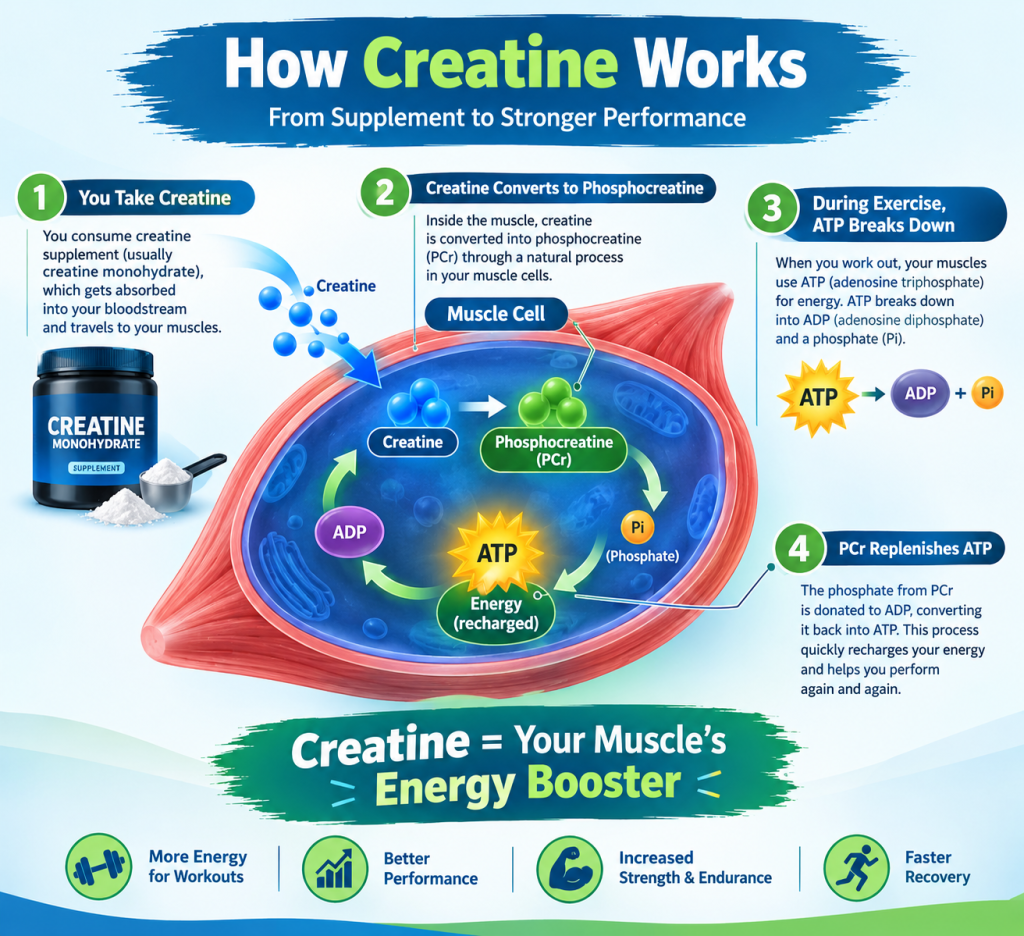
To understand the benefits of creatine, it’s helpful to understand its role in cellular energy. Your muscles use a molecule called adenosine triphosphate (ATP) for energy during short, intense bursts of activity like sprinting, jumping, or heavy weightlifting. When your muscles contract, ATP is broken down to release energy, creating a byproduct called ADP (adenosine diphosphate). You only have a small reserve of ATP, which can deplete in seconds.
This is where creatine comes in. In your muscles, creatine is stored as phosphocreatine. This compound acts as a rapid reserve to donate a phosphate group to ADP, quickly regenerating it back into ATP. By increasing the amount of phosphocreatine in your muscles, you can produce more ATP for high-intensity work. This translates directly to improved performance: you can lift heavier, perform more reps, and recover faster between sets.
It’s crucial to understand that creatine does not directly build muscle in the same way that testosterone or other anabolic hormones do. Instead, it provides the fuel your muscles need to train harder, which, over time, leads to greater muscle growth and strength gains.
The Primary Benefits of Creatine
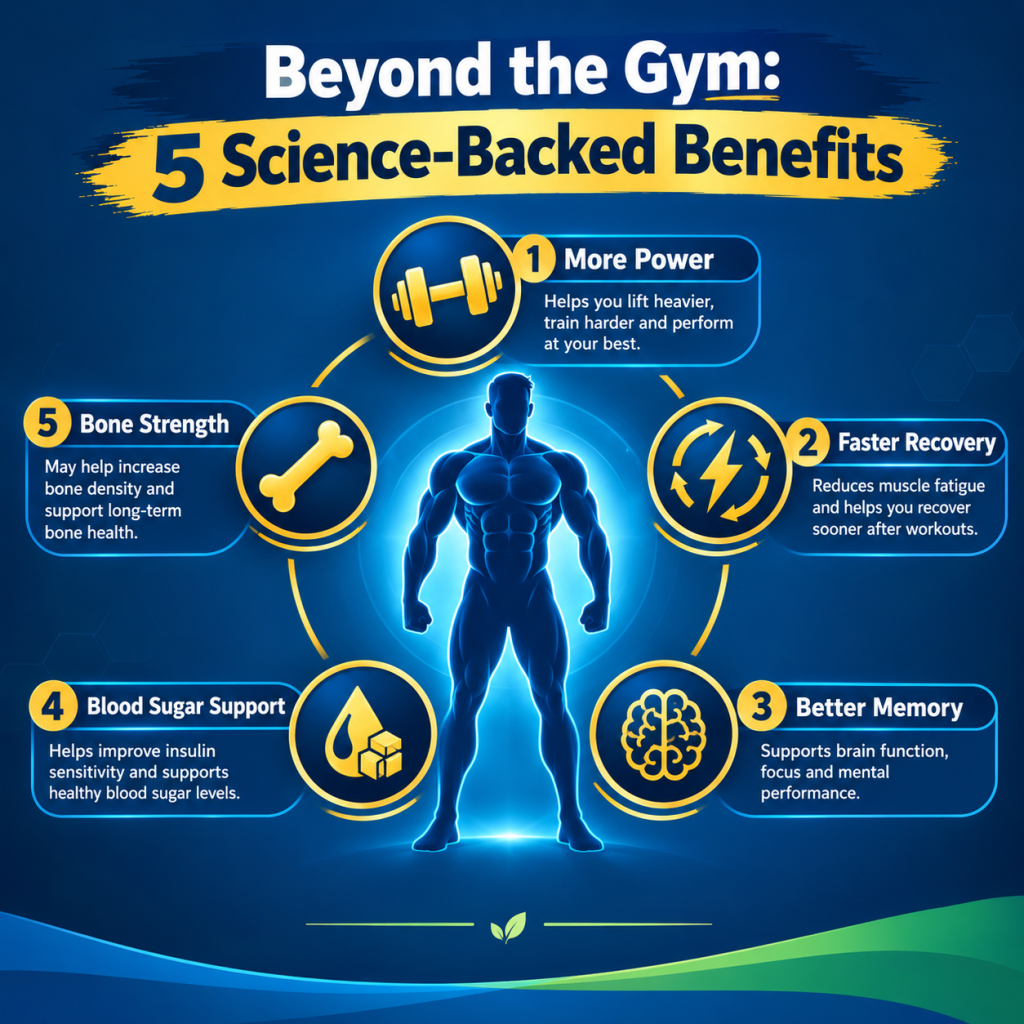
While it’s most famous for its performance-enhancing effects, the benefits of creatine extend beyond muscle building. Here’s a breakdown of what this powerful supplement can do, supported by a vast body of research.
1. Enhanced Athletic Performance and Muscle Growth
This is the most well-established benefit. Creatine is a go-to supplement for increasing strength, power, and muscle mass. By supporting the rapid production of ATP, it allows you to push harder during resistance training. This increased training volume, coupled with creatine’s ability to draw water into muscle cells (creating a more anabolic environment), leads to significant improvements in muscle size and strength over time. One of the key benefits of creatine is its ability to amplify the results of consistent strength training.
2. Improved Muscle Recovery
Creatine can also help you bounce back faster after a tough workout. It has been shown to reduce muscle damage and inflammation, allowing for quicker recovery. By supporting glycogen storage (the stored form of glucose in muscles), creatine may help your muscles replenish energy and heal more efficiently post-exercise.
3. Cognitive and Brain Health Benefits
The brain also requires significant amounts of ATP for optimal function. Creatine is naturally found in the brain, and supplementation can help improve its energy reserves. Research suggests that taking creatine may lead to improvements in memory, attention, and processing speed, especially in individuals who are sleep-deprived. A study on patients with Alzheimer’s disease found that a high dose of creatine led to improvements in working memory and overall cognition.
4. Potential Health Benefits Beyond the Gym
The scope of creatine research is expanding, and it’s showing promise in several other areas. It may help improve glycemic control in people with diabetes by helping muscle cells take up glucose from the blood. Furthermore, some studies suggest it can help alleviate symptoms of fatigue, including in cases of long COVID. Its potential to support muscle and bone health is also being explored, particularly in older adults and menopausal women where it may help offset age-related muscle loss (sarcopenia) and support bone mineral density.
Choosing and Taking Creatine: A Practical Guide
Which Form of Creatine is Best?
While there are many forms available, creatine monohydrate is the most effective and widely studied. It’s the gold standard in the sports nutrition world. Other forms often claim to be superior, but no research suggests they offer any extra benefits. Powders are considered the most effective and best absorbed, and high-quality unflavored powder mixes easily into any liquid without altering the taste.
How to Take Creatine: Dosage and Timing
When considering how to take creatine, the process is straightforward. The goal is to saturate your muscles with creatine over time.
- Standard Daily Dose: For most people, the recommended dose is 3 to 5 grams per day. For those weighing close to or over 200 pounds, a dose closer to 10 grams per day might be beneficial. This lower, daily dose will gradually saturate your muscles over a few weeks.
- Loading Phase (Optional): Some athletes use a “loading phase” to saturate their muscles more quickly. This involves taking a higher dose—around 20 grams per day, split into 4 doses—for 5 to 7 days, followed by the standard 5-gram maintenance dose. This can fill your muscle stores in about a week instead of a month. However, most experts agree that a loading phase is not necessary for long-term results and is more likely to cause mild side effects like stomach discomfort.
- Timing: The exact timing of your dose is less important than consistency. Some studies suggest taking it around your workout time (before or after) might be slightly beneficial due to increased blood flow to the muscles, but the current consensus is that you will see similar results as long as you take it every day, even on rest days.
How to Take Creatine: Practical Tips
- Mix and Drink: The most common method is to mix the powder with water, juice, or a protein shake. Combining it with carbohydrates may help improve absorption, but this isn’t strictly necessary.
- Stay Hydrated: Because creatine draws water into your muscle cells, it’s important to maintain good fluid intake throughout the day.
- Be Consistent: The key to success is consistency. Take your daily dose every day, at a time that’s convenient for you, to maintain elevated creatine levels in your muscles.
Is Creatine Safe? Understanding the Side Effects and Myths
A common question is: Is creatine safe? According to decades of research, for healthy individuals, yes, it is overwhelmingly considered safe and well-tolerated. A massive analysis of 685 clinical trials found no difference in the frequency of side effects between people taking creatine and those taking a placebo.
Common and Mild Creatine Side Effects
While serious side effects are rare, some people may experience mild issues, especially when starting supplementation or taking a high “loading” dose. The most common creatine side effects include:
- Water Retention and Weight Gain: Creatine draws water into muscle cells, which can cause a temporary weight gain of 3-5 pounds (about 1.5-2.5 kg) in the first week. This is intracellular water and is not harmful.
- Gastrointestinal (GI) Discomfort: Some individuals may experience bloating, stomach cramps, nausea, or diarrhea, particularly when taking large doses (like a loading phase). Splitting your daily dose into smaller servings or taking it with food can often help.
- Headaches: A small number of people report headaches early on. If this persists, switching the form (e.g., from capsules to powder) or trying a different brand might help.
Debunking Common Myths
Despite its well-established safety, several myths persist about creatine. Let’s clear them up:
- Myth: Creatine causes kidney damage. This is untrue. Extensive research shows no evidence that creatine supplementation causes kidney injury in healthy individuals. While it can elevate creatinine levels (a byproduct of creatine metabolism used as a marker for kidney health), this is a normal result of taking the supplement and is not a sign of organ damage.
- Myth: Creatine is dehydrating. This is also false. Creatine does not increase your body’s fluid needs or cause overall dehydration. While it draws water into muscles, this does not lead to dangerous dehydration.
- Myth: Creatine is an anabolic steroid. Absolutely not. Creatine is a natural compound, not a hormone. It works in a completely different way than steroids and does not interfere with your body’s natural hormone production.
Who Should Be Cautious?
For healthy adults, creatine is safe. However, certain groups should exercise caution or consult a doctor before starting supplementation.
- People with Kidney Disease: Those with pre-existing kidney conditions or who are taking nephrotoxic (kidney-damaging) drugs should speak with a healthcare professional first, as the kidneys are responsible for excreting creatine’s byproducts.
- Pregnant or Breastfeeding Women: There is insufficient evidence regarding the safety of creatine for pregnant or nursing mothers. Caution is advised.
- Children: Creatine is generally not recommended for children, and the priority should be nutritional rehabilitation and a balanced diet.
Conclusion: Is Creatine Right for You?
What is creatine? It’s a naturally occurring, well-researched, and incredibly effective compound that provides the fuel for your muscles and brain to perform at their best.
From enhancing gym performance and accelerating muscle growth to supporting cognitive function, the benefits of creatine are broad and backed by science. How to take creatine is also simple: a consistent daily dose of 3 to 5 grams of creatine monohydrate is all you need. While minor creatine side effects like water retention or mild stomach discomfort can occur, they are usually temporary and manageable.
Ultimately, when asking is creatine safe, the evidence is clear. For healthy individuals, it is one of the safest and most effective supplements available. If you are looking for a legal, science-backed way to boost your performance, strength, and overall health, creatine is an excellent place to start. As with any new supplement, it’s always a good idea to consult with a healthcare provider to ensure it’s the right choice for your specific health situation.