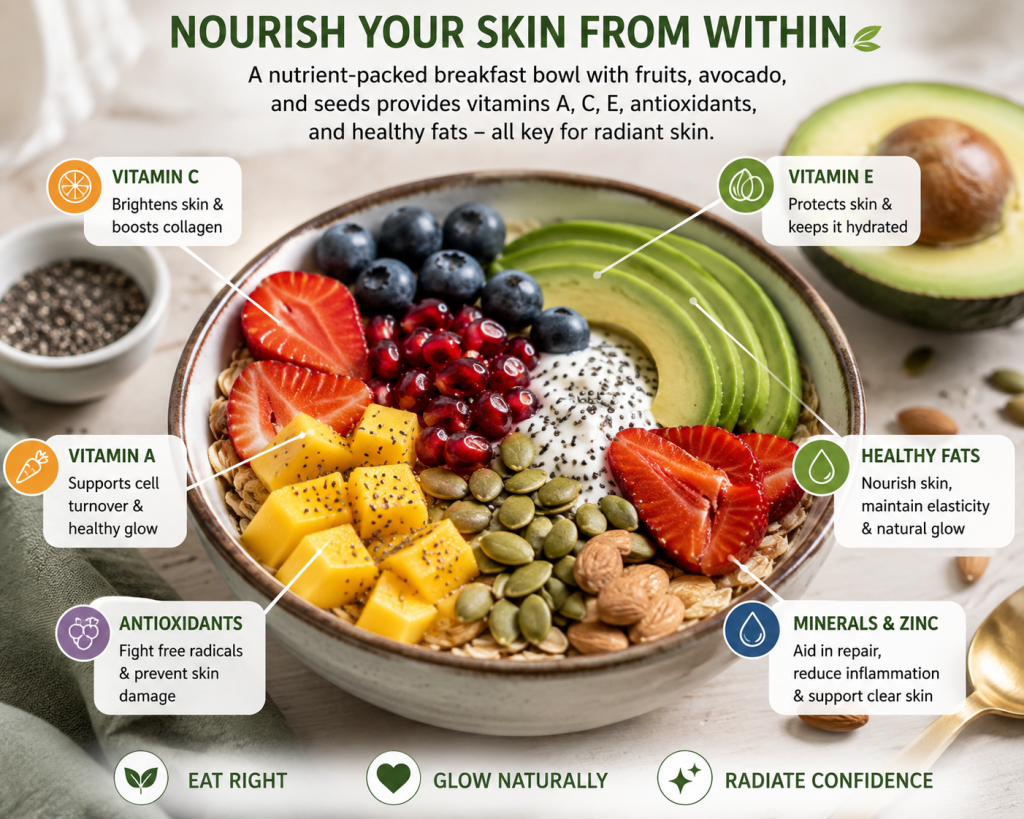
Looking for foods for glowing skin? Nutrition plays a crucial role in skin health. Key nutrients like vitamins A, C, E, zinc, and omega-3 fatty acids support skin cell turnover, collagen production, and hydration. Antioxidant-rich fruits and vegetables help neutralize free radicals, preventing dullness and damage. A balanced, whole-food diet – rich in colorful produce, healthy fats, and lean proteins – is the best foundation for a radiant complexion. Below are 15 nutrient-packed foods that dermatologists and dietitians recommend to help brighten your skin from the inside out.
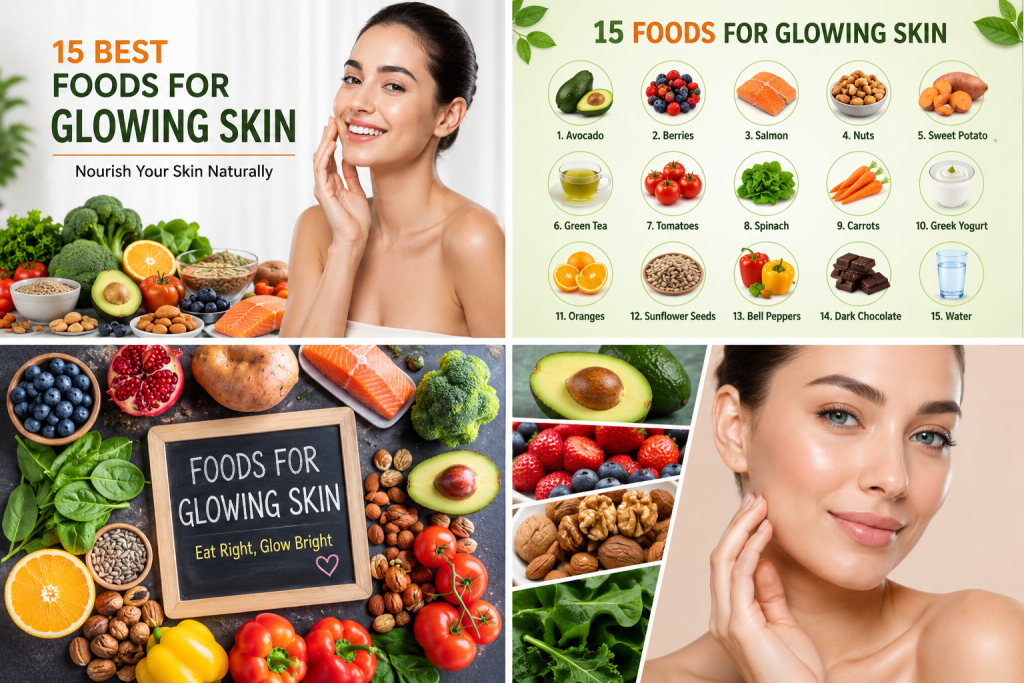
Figure: A nutrient-packed breakfast bowl with fruits, avocado, and seeds provides vitamins A, C, E, antioxidants, and healthy fats – all key for radiant skin.
Avocado
Avocados are loaded with healthy monounsaturated fats and skin-friendly vitamins. They supply vitamins C and E, which support collagen formation and protect against oxidative stress. In fact, a clinical trial found that eating one avocado daily for 8 weeks significantly improved facial skin elasticity and firmness in healthy women. The fats in avocado also help moisturize the skin from within. Enjoy avocado sliced on toast or blended into smoothies to tap its hydrating, glow-boosting benefits.
Salmon (and Other Fatty Fish)
Oily fish like salmon, mackerel, and sardines are rich sources of omega-3 fatty acids, which help maintain the skin’s lipid barrier and reduce inflammation. Salmon in particular contains astaxanthin, a potent antioxidant that may improve skin elasticity and hydration. It’s also high in vitamin D, important for skin cell growth and repair. Eating fatty fish a few times a week can help prevent dry, flaky skin and support a dewy complexion. (Other omega-3 sources include chia seeds and walnuts.)
Berries (Blueberries, Strawberries, etc.)
Berries are skin superfoods thanks to their deep color and high antioxidant content. Blueberries, raspberries, blackberries and strawberries are packed with vitamin C and polyphenols, which help protect skin cells from UV damage and oxidative stress. These antioxidants also support collagen production and can help reduce inflammation. A daily serving of mixed berries (fresh or frozen) can help even out skin tone and add a healthy glow. Try them in oatmeal, yogurt, or as a snack.
Leafy Greens (Spinach, Kale, Swiss Chard)
Leafy green vegetables are abundant in carotenoids (like beta-carotene and lutein), vitamins, and minerals essential for skin health. For example, kale is extremely high in vitamin A, a key nutrient for healthy skin cell turnover. Vitamin A (beta-carotene) helps fade hyperpigmentation and supports a smooth texture. Greens also provide vitamin C, vitamin K, and antioxidants. Aim for at least one cup of raw greens per day (in salads or smoothies) to help promote a brighter complexion from the inside out.
Bell Peppers
Brightly colored bell peppers (especially red and orange) are among the richest dietary sources of vitamin C – even more than oranges. Vitamin C is crucial for collagen synthesis, which keeps skin firm and plump. Eating bell peppers or adding them to meals provides a big boost of antioxidants and hydration (they’re ~90% water). Their vitamins A and C also fight inflammation and sun-induced damage. Try raw pepper slices with hummus or stir-fry them with lean protein for a skin-brightening meal.
Carrots
Carrots are high in beta-carotene, an antioxidant that the body converts to vitamin A. Vitamin A is known to prevent wrinkles, support cell growth, and protect against UV damage. A study even suggests beta-carotene can act as a natural sun protectant, helping prevent sunburn. Just be aware that eating excess beta-carotene can temporarily tint skin orange (carotenemia), though it’s harmless. For glowing skin, enjoy carrots roasted, juiced, or shredded into salads.
Tomatoes
Tomatoes (and other red/pink fruits like watermelon) are rich in lycopene, a powerful antioxidant. Lycopene helps protect the skin from UV-related damage and may improve skin texture. For example, one report notes lycopene is “one of the best antioxidants to help prevent UV damage”. Regularly eating tomatoes – whether raw, cooked, or in sauce – can boost your skin’s natural defense against sunburn and photo-aging. Pair tomatoes with a little healthy fat (like olive oil) to help absorb lycopene.
Nuts and Seeds
A variety of nuts and seeds deliver skin-loving nutrients. Almonds, sunflower seeds and hazelnuts are high in vitamin E, a fat-soluble antioxidant that protects skin from UV damage. In fact, one study found that women who ate almonds daily had significantly fewer wrinkles and dark spots. Walnuts and flaxseeds provide plant-based omega-3 fatty acids, which reduce inflammation and help skin stay supple. Pumpkin and sunflower seeds add zinc and selenium for repair and immune defense. Snack on a handful of mixed nuts/seeds each day, or sprinkle them over salads and oatmeal for added skin nutrients.
Eggs
Eggs are a convenient source of skin-supporting vitamins. The yolks are rich in vitamin A and vitamin E, both of which help maintain healthy, hydrated skin. Vitamin A (retinol) supports cell renewal, while vitamin E acts as an antioxidant barrier against free radicals. Eggs also provide protein (collagen building blocks) and biotin, a B-vitamin important for skin health. Hard-boil or scramble them to get a morning boost of these nutrients for glowing skin.
Green Tea
Green tea contains EGCG and other polyphenols that are potent antioxidants. Research shows that drinking green tea (or using green tea extract) can reduce skin roughness and boost hydration. EGCG in green tea also helps protect against photoaging by neutralizing free radicals from UV rays. Sipping a cup of green tea daily (hot or iced) gives your skin these anti-inflammatory, anti-aging benefits. (Plus you’ll get a gentle energy lift!)
Turmeric
Turmeric’s active compound curcumin has well-documented anti-inflammatory and antioxidant effects. Studies indicate curcumin may help prevent premature aging, treat acne and psoriasis inflammation, and speed wound healing. Adding turmeric to your diet (in curries, soups, or golden milk) can help calm skin inflammation and combat free radical damage from sun and pollution. The spice may also inhibit enzymes that break down collagen, helping keep skin firm.
Olive Oil
Extra-virgin olive oil is a kitchen staple for skin health. It’s rich in monounsaturated fats and phenolic antioxidants, which support the integrity of skin cells and reduce oxidative stress. These healthy fats act like an internal moisturizer, helping to maintain elasticity and smoothness. Use olive oil for salad dressings, sautéing vegetables, or drizzling over roasted dishes. Regular consumption of olive oil (as in a Mediterranean-style diet) is linked to supple, youthful skin.
Dark Chocolate
Good news for chocolate lovers: dark chocolate (70% cocoa or higher) contains flavonoids and polyphenols that benefit the skin. These compounds can help inhibit enzymes that degrade collagen and elastin, supporting the skin’s structure. Dark chocolate also has some sun-protective effects; one study found it helped improve skin density and hydration. Enjoy a small piece of high-cocoa dark chocolate as an antioxidant-rich treat – just be mindful of added sugars.
Water (and Hydrating Foods)
Hydration is essential for glowing skin. While not a “food” per se, drinking enough water (about 8 glasses a day) helps maintain skin moisture and plumpness. Studies show that severe dehydration can reduce skin turgor (elasticity). You can also hydrate through water-rich foods: cucumbers, watermelon, celery, oranges and soups add moisture and minerals. Bakovic notes that consuming water and water-rich produce can reduce fine lines and wrinkles by keeping the skin supple. Aim to hydrate consistently throughout the day for a refreshed, dewy complexion.
Summary
Eating a variety of nutrient-dense, whole foods is key to naturally improving your skin’s radiance. These 15 foods – packed with vitamins A, C, E, omega-3s, zinc, and antioxidants – support collagen, fight inflammation, and boost hydration. Incorporate them alongside a balanced diet and good skincare routine. You’ll not only help your skin look brighter and healthier but also improve your overall wellness. Enjoy these delicious foods regularly, and your skin will reflect the care from within!
Meta title: 15 Best Foods for Glowing Skin & Brighter Complexion
Meta description: Explore 15 best foods for glowing skin and a brighter complexion—packed with vitamins, antioxidants, and healthy fats to nourish your skin.
URL Slug: foods-for-glowing-skin
FAQs
Q: What foods make your skin glow?
A: Foods rich in antioxidants and skin-friendly vitamins are best for a glow. Try fruits and veggies like berries, oranges, tomatoes, and leafy greens – they’re high in vitamin C and antioxidants that boost collagen and protect cells. Healthy fats from avocados, nuts, and fish (omega-3) keep skin supple and hydrated. In general, a varied diet of colorful produce, lean proteins, and adequate hydration will promote the healthiest, most radiant skin.
Q: Which vitamins improve skin complexion?
A: Vitamins A, C, and E are especially important. Vitamin A (from carrots, sweet potatoes, leafy greens) supports skin cell turnover and a smooth texture. Vitamin C (from bell peppers, citrus fruits, berries) is key for collagen production and brightening. Vitamin E (from nuts, seeds, and olive oil) is a powerful antioxidant that helps guard against UV damage. Other nutrients like zinc, selenium, and omega-3 fats (found in seeds, nuts, seafood) also help repair and protect skin.
Q: Can diet really affect my skin’s brightness?
A: Yes. Research shows a clear link between diet and skin health. Diets rich in whole, unprocessed foods with phytonutrients tend to give better skin results. For example, a mostly plant-based diet high in fruits and vegetables has been associated with improved skin elasticity and hydration. Conversely, high sugar and refined carbs can promote inflammation and glycation, which dull the skin. So choosing a nutrient-dense diet can noticeably brighten your complexion over time.
Q: Is drinking water good for glowing skin?
A: Absolutely. Proper hydration is fundamental for supple skin. Water helps maintain skin moisture and elasticity. While studies on water and skin are mixed, severe dehydration is known to reduce skin turgor (bounce-back). Besides plain water, eating hydrating foods (like cucumbers, watermelon, and soups) contributes to skin moisture. Staying well-hydrated can help reduce dryness and fine lines, giving skin a fresher, more radiant look.
Q: What foods should I avoid for bright complexion?
A: Limit foods that spike inflammation and glycation. Added sugar and high-glycemic carbs (white bread, pastries) can attach to collagen, causing “sugar sag” and premature aging. Too much processed meat and salty snacks may dehydrate or inflame the skin. Alcohol should also be used sparingly, as it can dehydrate and trigger flushing. Instead, focus on whole, skin-supportive foods listed above, and use sunscreen daily to protect the glow you’re cultivating from within.