1. What Is Fatty Liver Disease?
Fatty liver disease is a condition in which excess fat builds up inside the liver cells. A small amount of fat in the liver is normal, but when fat makes up more than 5–10% of the liver’s weight, it becomes a medical condition known as fatty liver disease. This condition is becoming increasingly common worldwide due to unhealthy diets, obesity, diabetes, and sedentary lifestyles.
The liver is one of the most important organs in the human body. It performs hundreds of vital functions, including filtering toxins from the blood, producing bile for digestion, storing nutrients, regulating blood sugar levels, and helping the body process fats, proteins, and carbohydrates. When too much fat accumulates in the liver, these functions can gradually become impaired.
In the early stages, fatty liver disease often causes no noticeable symptoms, which is why many people do not realize they have it. However, if left untreated, the condition can progress to inflammation, liver scarring (fibrosis), cirrhosis, and even liver failure in severe cases.
Fatty liver disease is generally divided into two main categories:
Non-Alcoholic Fatty Liver Disease (NAFLD)
Non-Alcoholic Fatty Liver Disease occurs in people who drink little or no alcohol. It is the most common type of fatty liver disease and is strongly linked to obesity, insulin resistance, type 2 diabetes, high cholesterol, and poor eating habits.
NAFLD itself has two stages:
- Simple Fatty Liver (NAFL): Fat accumulates in the liver without significant inflammation or damage.
- Non-Alcoholic Steatohepatitis (NASH): A more serious form where liver inflammation and damage occur alongside fat buildup.
NASH can eventually lead to fibrosis, cirrhosis, or liver cancer if not managed properly.
Alcoholic Fatty Liver Disease (AFLD)
Alcoholic Fatty Liver Disease is caused by excessive alcohol consumption. The liver breaks down alcohol, but heavy drinking can damage liver cells and increase fat accumulation. Over time, continued alcohol abuse may lead to alcoholic hepatitis and cirrhosis.
The good news is that early-stage alcoholic fatty liver disease can often be reversed if alcohol consumption is stopped and healthy lifestyle changes are adopted.
How Fat Builds Up in the Liver
Fatty liver develops when the body either produces too much fat or cannot properly break down and remove fat from the liver. Several factors contribute to this process, including:
- Eating high-calorie and high-sugar foods
- Lack of physical activity
- Obesity
- Insulin resistance
- High triglyceride levels
- Excessive alcohol intake
As fat continues to accumulate, the liver becomes inflamed and less efficient at functioning properly.
Why Fatty Liver Disease Is Increasing
Fatty liver disease has become a major global health concern due to modern lifestyle habits. Increased consumption of processed foods, sugary drinks, fast food, and reduced physical activity have significantly contributed to rising obesity rates and metabolic disorders.
Today, fatty liver disease affects millions of people worldwide, including children and young adults. Many health experts consider it one of the fastest-growing liver diseases globally.
Is Fatty Liver Dangerous?
In many cases, fatty liver disease can be managed and even reversed during the early stages through weight loss, healthy eating, regular exercise, and lifestyle modifications. However, ignoring the condition may result in severe liver complications over time.
The risk becomes particularly serious when fatty liver progresses to:
- Liver inflammation
- Fibrosis (scar tissue formation)
- Cirrhosis
- Liver failure
- Liver cancer
This is why early diagnosis and proper management are extremely important.
Key Takeaway
Fatty liver disease occurs when excess fat accumulates in the liver, affecting its ability to function properly. Although it often develops silently without symptoms, it can become dangerous if left untreated. The condition is closely associated with obesity, diabetes, poor diet, and lack of exercise, but with early intervention and healthy lifestyle changes, fatty liver disease is often reversible.
2. Types of Fatty Liver Disease
Fatty liver disease is broadly classified based on its cause and how much damage it creates in the liver. While all types involve fat accumulation in liver cells, their severity, progression, and treatment can be very different. Understanding these types is important because early identification helps prevent serious complications like cirrhosis or liver failure.
Below are the main types of fatty liver disease:
A. Non-Alcoholic Fatty Liver (NAFL)
Non-Alcoholic Fatty Liver (NAFL) is the earliest and most common form of fatty liver disease. It occurs when fat builds up in the liver of people who drink little or no alcohol.
In NAFL, fat is present in the liver, but there is no significant inflammation or liver cell damage. Because of this, NAFL is often considered a “benign” or mild stage of fatty liver disease.
Key Features of NAFL:
- Fat accumulation in liver cells
- No major inflammation
- No significant liver cell injury
- Usually no symptoms
- Often discovered during routine health checkups
Causes:
- Overweight or obesity
- High-calorie diet
- Lack of exercise
- Insulin resistance
- High triglycerides or cholesterol
- Sedentary lifestyle
Is it dangerous?
NAFL is not immediately dangerous, but it should not be ignored. If lifestyle habits remain unhealthy, NAFL can gradually progress into a more severe condition called NASH (Non-Alcoholic Steatohepatitis).
Can it be reversed?
Yes. NAFL is highly reversible with:
- Weight loss
- Healthy diet
- Regular physical activity
- Reduced sugar and fat intake
B. Non-Alcoholic Steatohepatitis (NASH)
Non-Alcoholic Steatohepatitis (NASH) is a more serious and advanced form of NAFLD. In this condition, fat buildup is not just stored in the liver—it also causes inflammation and damage to liver cells.
NASH is dangerous because it can silently progress and lead to permanent liver damage over time.
Key Features of NASH:
- Fat accumulation with inflammation
- Liver cell injury and swelling
- Possible fibrosis (scarring begins)
- May show symptoms in later stages
Symptoms (may appear in some people):
- Constant fatigue
- Pain or discomfort in upper right abdomen
- Weakness
- Unexplained weight loss
- General feeling of illness
Causes:
NASH develops from untreated NAFL and is strongly linked to:
- Obesity
- Type 2 diabetes
- Metabolic syndrome
- High cholesterol
- Poor diet and inactivity
Why is NASH serious?
NASH is a progressive disease. If not controlled, it can lead to:
- Liver fibrosis (scarring)
- Cirrhosis (severe liver damage)
- Liver failure
- Liver cancer
Can it be reversed?
In early stages, NASH can improve with strict lifestyle changes such as:
- Significant weight loss (5–10% body weight)
- Healthy diet (low sugar and fat)
- Regular exercise
However, advanced NASH-related damage may be permanent.
C. Alcoholic Fatty Liver Disease
Alcoholic Fatty Liver Disease occurs due to excessive and long-term alcohol consumption. The liver is responsible for breaking down alcohol, but when alcohol intake is too high, it overwhelms the liver and leads to fat accumulation.
This is one of the earliest stages of alcohol-related liver damage.
Key Features:
- Fat buildup in liver due to alcohol
- Liver enlargement in some cases
- Often reversible in early stage
- May progress to alcoholic hepatitis or cirrhosis
Causes:
- Heavy alcohol drinking over time
- Frequent binge drinking
- Poor nutrition combined with alcohol use
Symptoms:
In early stages, symptoms may not appear. When present, they include:
- Fatigue
- Loss of appetite
- Nausea
- Abdominal discomfort
- In severe cases: jaundice (yellow skin and eyes)
Is it dangerous?
Yes, if alcohol consumption continues. It can progress to:
- Alcoholic hepatitis (liver inflammation)
- Cirrhosis (permanent scarring)
- Liver failure
Can it be reversed?
Yes, especially in early stages. The most important step is:
- Complete avoidance of alcohol
- Healthy diet and lifestyle improvement
The liver has a strong ability to recover if damage is not advanced.
D. Fatty Liver During Pregnancy (Acute Fatty Liver of Pregnancy)
Acute Fatty Liver of Pregnancy (AFLP) is a rare but serious condition that occurs during the late stage of pregnancy, usually in the third trimester. It is considered a medical emergency.
Key Features:
- Rapid fat accumulation in the liver
- Sudden liver dysfunction
- Can affect both mother and baby
Possible Symptoms:
- Nausea and vomiting
- Severe fatigue
- Abdominal pain (especially upper right side)
- Jaundice
- Loss of appetite
- Confusion in severe cases
Causes:
The exact cause is not fully understood, but possible factors include:
- Genetic disorders affecting fatty acid metabolism
- Hormonal changes during pregnancy
- Metabolic stress on the liver
Why is it serious?
If not treated quickly, it can lead to:
- Liver failure in the mother
- Complications for the baby
- Life-threatening conditions
Treatment:
- Immediate hospitalization
- Careful monitoring
- Early delivery of the baby (often necessary)
Most women recover after prompt medical treatment and delivery.
Key Takeaway
Fatty liver disease includes several types, ranging from mild fat accumulation (NAFL) to severe inflammatory damage (NASH), alcohol-related liver injury, and rare pregnancy-related complications. While some forms are fully reversible with lifestyle changes, others can become serious if ignored. Early diagnosis and proper management are essential for preventing long-term liver damage.
3. Causes of Fatty Liver Disease
Fatty liver disease develops when the balance between fat production and fat breakdown in the liver becomes disturbed. As a result, excess fat starts accumulating inside liver cells. This condition is usually not caused by a single factor, but rather a combination of lifestyle habits, metabolic problems, genetics, and sometimes medications.
Below are the major causes explained in detail:
i. Obesity
Obesity is one of the strongest risk factors for fatty liver disease. When a person has excess body fat, especially around the abdomen, the body tends to store more fat in the liver as well.
How it causes fatty liver:
- Excess calorie intake is converted into fat
- Fat accumulates in liver cells
- Insulin resistance increases fat storage
People who are overweight or obese are significantly more likely to develop Non-Alcoholic Fatty Liver Disease (NAFLD).
ii. Diabetes (Type 2 Diabetes)
Type 2 diabetes is closely linked with fatty liver disease. Many people with diabetes also develop fatty liver due to insulin resistance.
How diabetes contributes:
- Insulin resistance increases fat buildup in liver
- High blood sugar levels promote fat production
- Impaired fat metabolism in the liver
In fact, fatty liver and diabetes often occur together and can worsen each other over time.
iii. High Cholesterol and High Triglycerides
High levels of cholesterol and triglycerides in the blood increase the risk of fat accumulation in the liver.
Mechanism:
- Excess fat in blood is deposited in the liver
- Liver struggles to process and remove fats
- Leads to fat buildup inside liver cells
This condition is commonly seen in people with metabolic syndrome.
iv. Poor Diet
A poor or unbalanced diet is a major cause of fatty liver disease.
Problem foods:
- High-fat meals
- Excess fried foods
- Refined carbohydrates (white rice, white bread)
- Processed foods
Effects:
- Increased fat production in the liver
- Nutrient deficiency affects liver function
- Slower fat metabolism
A long-term unhealthy diet gradually damages liver health.
v. Excess Alcohol Consumption
Alcohol is a direct toxin to the liver. Excess drinking forces the liver to process alcohol continuously, which disrupts normal fat metabolism.
How alcohol causes fatty liver:
- Alcohol breakdown produces harmful substances
- These substances damage liver cells
- Fat builds up inside liver tissue
This leads to Alcoholic Fatty Liver Disease (AFLD), which can progress to more severe conditions if drinking continues.
vi. Lack of Exercise
A sedentary lifestyle is another major contributor to fatty liver disease.
How inactivity affects the liver:
- Reduced calorie burning leads to fat storage
- Slower metabolism increases fat buildup
- Insulin resistance becomes more likely
Regular physical activity helps the body use fat for energy and reduces liver fat effectively.
vii. Fast Food and Sugary Drinks
Modern diets rich in fast food and sugary beverages are strongly linked to fatty liver disease.
Harmful components:
- Trans fats
- High fructose corn syrup
- Refined sugar
- Excess calories
Effects on liver:
- Sugar is converted into fat in the liver
- Rapid fat accumulation occurs
- Increased risk of inflammation
Soft drinks, energy drinks, and packaged snacks are major contributors.
viii. Genetics (Family History)
Genetics also play a role in fatty liver disease. Some people are naturally more prone to storing fat in the liver due to inherited traits.
Genetic influence:
- Family history of liver disease increases risk
- Certain gene variations affect fat metabolism
- Some people develop fatty liver even with a normal weight
However, lifestyle still plays a major role even in genetically predisposed individuals.
ix. Certain Medications
Some medications can contribute to fatty liver disease as a side effect.
Examples include:
- Corticosteroids
- Some cancer treatments
- Certain HIV medications
- Methotrexate
- Tamoxifen
How they affect the liver:
- Interfere with fat metabolism
- Cause fat accumulation in liver cells
- May damage liver function over time
Not everyone taking these medicines develops fatty liver, but risk increases with long-term use.
Key Takeaway
Fatty liver disease is usually caused by a combination of lifestyle and metabolic factors. The most common causes include obesity, diabetes, unhealthy diet, lack of exercise, and excessive alcohol intake. Genetic factors and certain medications may also increase risk. The good news is that most of these causes are preventable and manageable through healthy lifestyle changes.
4. Symptoms of Fatty Liver Disease
Fatty liver disease is often called a “silent disease” because in its early stages, most people do not notice any clear symptoms. Fat gradually builds up in the liver without causing immediate pain or obvious discomfort. Because of this, many individuals only discover the condition during routine health check-ups or medical tests done for other reasons.
However, as the disease progresses, the liver becomes more affected, and different symptoms may start to appear.
Early Stage: No Noticeable Symptoms
In the early stages of fatty liver (especially in NAFL or simple fatty liver), most people feel completely normal. The liver is still functioning, even though fat is slowly accumulating inside it.
Why symptoms are absent:
- The liver has no pain nerves
- Early fat buildup does not strongly affect function
- The body compensates for minor changes
Because of this, fatty liver can remain undetected for years unless diagnosed through:
- Blood tests (ALT, AST)
- Ultrasound scan
- Routine health screening
Common Symptoms of Fatty Liver Disease
As the condition progresses, some non-specific symptoms may appear. These symptoms are often mild at first and are easily ignored.
i. Fatigue (Tiredness)
Fatigue is one of the most common symptoms of fatty liver disease.
Why it happens:
- The liver becomes less efficient in energy metabolism
- Toxins are not properly filtered from the blood
- Overall body metabolism slows down
People often feel:
- Constant tiredness
- Low energy throughout the day
- Difficulty staying active
ii. Belly Discomfort
Some individuals may feel discomfort or heaviness in the upper right side of the abdomen, where the liver is located.
Characteristics:
- Dull pain or pressure
- Feeling of fullness
- Mild swelling sensation
This happens due to:
- Liver enlargement
- Inflammation in liver tissue (especially in NASH)
iii. Weight Gain or Difficulty Losing Weight
Fatty liver is closely linked with metabolic problems, especially obesity and insulin resistance.
Symptoms include:
- Unexplained weight gain
- Belly fat accumulation
- Difficulty losing weight despite dieting
This occurs because the body stores excess fat in the liver and abdominal region.
iv. Weakness
People with fatty liver often feel physically weak even after normal activity.
Possible reasons:
- Poor energy production in the liver
- Nutrient imbalance
- Metabolic slowdown
This weakness may affect daily work performance and physical endurance.
v. Loss of Appetite
Some individuals may experience reduced appetite or early fullness.
Causes:
- Liver inflammation affecting digestion
- Hormonal changes in metabolism
- Discomfort in the abdominal area
This symptom is more common in advanced fatty liver cases.
vi. Brain Fog (Difficulty Concentrating)
Fatty liver can sometimes affect mental clarity and focus.
Symptoms include:
- Difficulty concentrating
- Memory problems
- Feeling mentally slow or “foggy”
Why it happens:
- Toxin buildup in the blood
- Poor liver detoxification
- Changes in energy metabolism affecting the brain
vii. Yellowing of Skin and Eyes (Jaundice – Advanced Stage)
Jaundice is a serious and advanced symptom of liver disease. It usually does not appear in early fatty liver but may occur if the condition progresses to severe liver damage.
Signs:
- Yellow skin
- Yellowing of the whites of the eyes
- Dark urine
- Pale stool
Why it happens:
- Liver fails to properly process bilirubin (a waste product)
- Bile flow becomes impaired
If jaundice appears, it indicates significant liver dysfunction and requires immediate medical attention.
Key Takeaway
Fatty liver disease often develops silently without symptoms in the early stages. When symptoms do appear, they are usually mild and non-specific, such as fatigue, weakness, or abdominal discomfort. In advanced stages, more serious signs like jaundice may develop. Because symptoms are often absent early on, regular health check-ups are very important for early detection and prevention of complications.
5. Stages of Fatty Liver Disease
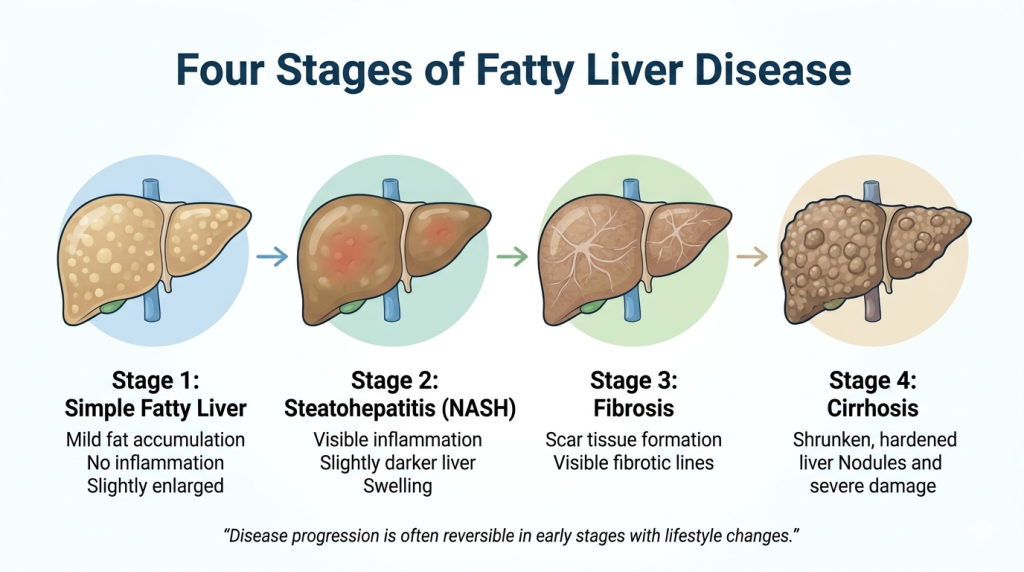
Fatty liver disease does not develop overnight. It progresses slowly over time, usually through four main stages. Understanding these stages is very important because early detection can help stop or even reverse the damage before it becomes severe.
Each stage represents a different level of liver damage, starting from simple fat buildup to serious liver failure risk.
Stage 1 – Simple Fatty Liver (Steatosis)
This is the earliest and mildest stage of fatty liver disease.
What happens in this stage:
- Fat starts accumulating inside liver cells
- No inflammation or liver cell damage occurs
- Liver function remains mostly normal
Symptoms:
- Usually no symptoms
- Most people feel completely healthy
- Detected accidentally during tests
Causes:
- Overeating
- Obesity
- Poor diet
- Lack of exercise
- Insulin resistance
Is it reversible?
Yes, this stage is fully reversible. With proper lifestyle changes such as weight loss, healthy diet, and regular exercise, the liver can return to normal within weeks or months.
Stage 2 – Non-Alcoholic Steatohepatitis (NASH)
This is a more serious stage where fatty liver begins to cause damage.
What happens in this stage:
- Fat buildup continues
- Liver cells become inflamed
- Liver tissue starts getting injured
Symptoms:
- Fatigue
- Mild abdominal discomfort
- Weakness
- Sometimes no clear symptoms
Why it is dangerous:
Inflammation means the liver is under stress. If not treated, NASH can slowly progress to permanent liver damage.
Causes:
- Untreated simple fatty liver
- Diabetes
- Obesity
- High cholesterol
- Poor lifestyle habits
Is it reversible?
Yes, but partially reversible in early stages. If caught early, NASH can improve with:
- Significant weight loss (5–10% of body weight)
- Strict diet control
- Regular exercise
However, if inflammation continues for a long time, damage may become permanent.
Stage 3 – Fibrosis
Fibrosis is the stage where the liver begins to develop scar tissue due to ongoing inflammation.
What happens in this stage:
- Healthy liver tissue is replaced by scar tissue
- Liver becomes stiff and less flexible
- Blood flow through the liver may be affected
Symptoms:
- Increased fatigue
- Abdominal discomfort
- Weakness
- Possible swelling in abdomen in later fibrosis
Why it is serious:
Scar tissue reduces liver function and increases the risk of progression to cirrhosis.
Is it reversible?
Fibrosis is partially reversible, especially in early fibrosis. If treated aggressively with lifestyle changes and medical supervision, further damage can be stopped and some improvement may occur. However, advanced fibrosis is harder to reverse.
Stage 4 – Cirrhosis
Cirrhosis is the most severe stage of fatty liver disease.
What happens in this stage:
- Extensive scar tissue replaces healthy liver cells
- Liver becomes permanently damaged
- Liver function is severely reduced
Symptoms:
- Jaundice (yellow skin and eyes)
- Swollen abdomen (ascites)
- Severe fatigue
- Easy bruising or bleeding
- Confusion (hepatic encephalopathy)
Why it is dangerous:
Cirrhosis can lead to:
- Liver failure
- Internal bleeding
- Liver cancer
- Life-threatening complications
Is it reversible?
Unfortunately, cirrhosis is generally not reversible. However, progression can be slowed or controlled with proper treatment, medication, and lifestyle changes. In severe cases, liver transplant may be required.
Key Summary of All Stages
| Stage | Condition | Damage Level | Reversibility |
| Stage 1 | Simple fatty liver | Mild fat buildup | Fully reversible |
| Stage 2 | NASH | Fat + inflammation | Partially reversible |
| Stage 3 | Fibrosis | Scar tissue formation | Partially reversible |
| Stage 4 | Cirrhosis | Severe liver damage | Not reversible (only manageable) |
6. Risk Factors of Fatty Liver Disease
Fatty liver disease can affect almost anyone, but some people are much more likely to develop it due to their health conditions, lifestyle habits, or age. These are known as risk factors. Understanding them helps identify high-risk individuals early so that preventive steps can be taken before the disease progresses.
Below are the main risk factors explained in detail:
i. Overweight and Obesity
Being overweight or obese is one of the strongest risk factors for fatty liver disease.
Why it increases risk:
- Excess body fat increases fat storage in the liver
- Abdominal (belly) fat is strongly linked with liver fat buildup
- Obesity often leads to insulin resistance
People with a higher Body Mass Index (BMI) are significantly more likely to develop Non-Alcoholic Fatty Liver Disease (NAFLD). Even a moderate weight loss can greatly reduce this risk.
ii. People with Diabetes (Especially Type 2)
Type 2 diabetes is closely connected with fatty liver disease.
How diabetes increases risk:
- Insulin resistance causes fat to accumulate in the liver
- High blood sugar promotes fat production
- Poor glucose control worsens liver metabolism
In fact, many diabetic patients already have some level of fatty liver without knowing it. The combination of diabetes and fatty liver can also increase the risk of liver inflammation (NASH).
iii. People Over 40 Years of Age
Age is another important risk factor.
Why risk increases with age:
- Metabolism naturally slows down
- Fat processing becomes less efficient
- Higher chances of developing diabetes and cholesterol issues
While fatty liver can occur at any age, individuals over 40 are more commonly affected due to long-term lifestyle and metabolic changes.
iv. Sedentary Lifestyle (Lack of Exercise)
A physically inactive lifestyle significantly increases the risk of fatty liver disease.
How inactivity affects the liver:
- Fewer calories are burned, leading to fat storage
- Reduced insulin sensitivity
- Slower metabolism
- Increased abdominal fat accumulation
People who sit for long hours, work desk jobs, or rarely exercise are at higher risk. Regular physical activity helps reduce liver fat and improve overall metabolism.
v. High Blood Pressure (Hypertension)
High blood pressure is often part of a group of conditions called metabolic syndrome, which is strongly linked to fatty liver disease.
Connection with fatty liver:
- Often occurs along with obesity and diabetes
- Indicates poor metabolic health
- Associated with insulin resistance
Although high blood pressure does not directly cause fatty liver, it significantly increases the risk when combined with other factors.
vi. Sleep Apnea
Sleep apnea is a condition where breathing repeatedly stops and starts during sleep. It is increasingly recognized as a risk factor for fatty liver disease.
How it contributes:
- Reduced oxygen levels affect liver function
- Increases inflammation in the body
- Associated with obesity and metabolic syndrome
- Disrupts hormone balance and fat metabolism
People with untreated sleep apnea often have a higher chance of developing fatty liver and its complications.
Other Important Risk Factors (Additional Insight)
Although not listed, a few more factors can also increase risk:
- High cholesterol or triglycerides
- Excess alcohol consumption
- Unhealthy diet (high sugar and fat intake)
- Family history of liver disease
- Certain medications
7. How Fatty Liver Is Diagnosed
Fatty liver disease is often difficult to detect in the early stages because it usually develops without clear symptoms. Many people only find out they have fatty liver during a routine health check-up or when investigating another medical condition. For this reason, doctors use several diagnostic methods to confirm the presence of fat in the liver and to understand how advanced the condition is.
Diagnosis usually involves a combination of blood tests, imaging techniques, and in some cases, a liver biopsy.
i. Blood Tests (ALT, AST)
Blood tests are usually the first step in evaluating liver health.
What are ALT and AST?
- ALT (Alanine Aminotransferase) and AST (Aspartate Aminotransferase) are enzymes found inside liver cells.
- When the liver is damaged or inflamed, these enzymes leak into the bloodstream.
What do the results indicate?
- High ALT and AST levels may suggest liver inflammation or injury
- ALT is more specific to liver damage compared to AST
- The ratio between ALT and AST can sometimes help doctors understand the pattern of liver disease
Important note:
- Normal ALT and AST levels do not always rule out fatty liver
- Some patients may have fatty liver even with normal liver enzyme levels
ii. Ultrasound Scan
Ultrasound is the most commonly used test for detecting fatty liver disease.
How it works:
- Uses sound waves to create images of the liver
- Helps detect changes in liver appearance caused by fat accumulation
What doctors look for:
- A brighter or “echogenic” liver (fat makes the liver appear brighter)
- Enlargement of the liver in some cases
- Changes in liver texture
Advantages:
- Simple, safe, and painless
- Widely available and affordable
- No radiation exposure
Limitations:
- Cannot measure exact fat percentage
- May miss very early or mild fatty liver
- Less accurate in obese patients
iii. CT Scan (Computed Tomography)
A CT scan provides more detailed cross-sectional images of the liver using X-rays.
How it helps:
- Detects fat accumulation in the liver
- Shows liver size, shape, and structure
- Can identify more advanced liver changes
Advantages:
- More detailed than ultrasound
- Useful in complex or unclear cases
Limitations:
- Uses radiation exposure
- More expensive than ultrasound
- Not routinely needed for simple fatty liver diagnosis
iv. MRI (Magnetic Resonance Imaging)
MRI is one of the most accurate imaging methods for detecting and measuring liver fat.
How it works:
- Uses magnetic fields and radio waves to create detailed images of internal organs
What it shows:
- Exact amount of fat in the liver
- Liver structure and possible inflammation
- Helps assess severity of disease more precisely
Advantages:
- Highly accurate and detailed
- No radiation exposure
- Useful for early detection and advanced evaluation
Limitations:
- Expensive
- Not always required for routine diagnosis
v. FibroScan (Transient Elastography)
FibroScan is a specialized non-invasive test used to measure liver stiffness, which helps detect fibrosis (scarring).
How it works:
- A small probe sends sound waves through the liver
- The speed of wave movement measures liver stiffness
What it shows:
- Level of liver stiffness (fibrosis stage)
- In some cases, fat content (steatosis measurement)
Why it is important:
- Helps determine how advanced fatty liver disease is
- Detects progression toward fibrosis or cirrhosis
Advantages:
- Quick and painless (usually takes 10–15 minutes)
- No needles or radiation
- More accurate than ultrasound for fibrosis detection
vi. Liver Biopsy
Liver biopsy is considered the gold standard test for diagnosing fatty liver disease, especially in complex cases.
How it is done:
- A small piece of liver tissue is taken using a thin needle
- The sample is examined under a microscope
What it can detect:
- Exact amount of fat in liver cells
- Degree of inflammation (NASH)
- Presence and severity of fibrosis or cirrhosis
Advantages:
- Most accurate method of diagnosis
- Helps confirm unclear or severe cases
Limitations:
- Invasive procedure
- Mild pain or discomfort may occur
- Small risk of bleeding or complications
- Not required for most patients
8. Best Diet Plan for Fatty Liver Disease
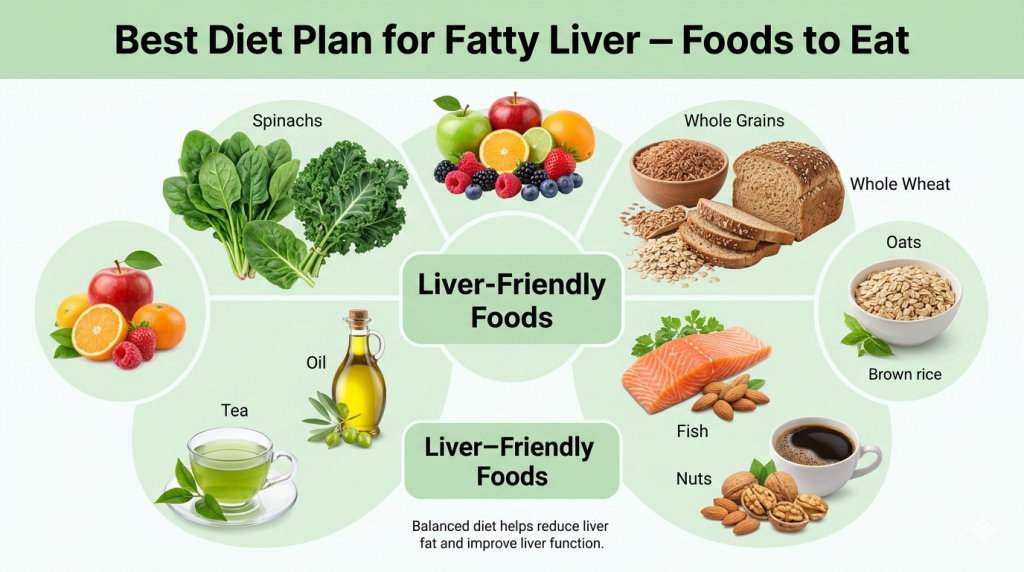
Diet plays a central role in managing and reversing fatty liver disease. In fact, in the early stages, lifestyle and dietary changes alone can significantly reduce liver fat and improve liver function. A proper diet helps reduce inflammation, control weight, and improve how the liver processes fat and sugar.
The main goal of a fatty liver diet is simple: reduce unhealthy fat buildup in the liver and improve metabolism.
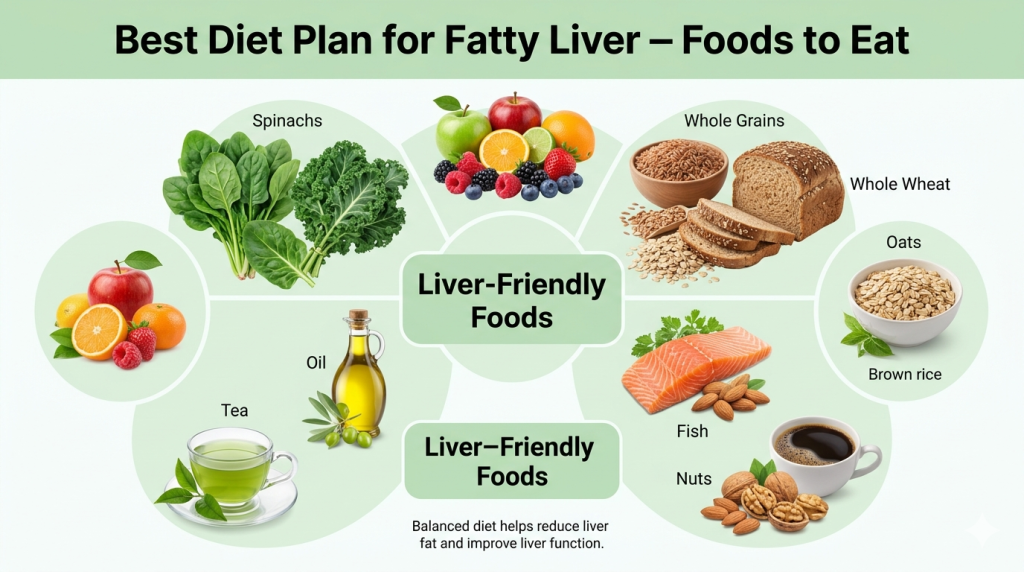
Foods to Eat (Liver-Friendly Foods)
A healthy fatty liver diet focuses on natural, nutrient-rich foods that support liver function and reduce fat accumulation.
🥬 Leafy Green Vegetables
Examples: spinach, kale, lettuce, cabbage, broccoli
Benefits:
- Rich in antioxidants
- Help reduce liver fat
- Improve detoxification
- Low in calories but high in nutrients
🍎 Fruits
Examples: apple, berries, orange, papaya, guava
Benefits:
- High in fiber
- Help control blood sugar levels
- Reduce cravings for unhealthy sugar
- Support digestion and metabolism
🌾 Whole Grains
Examples: brown rice, whole wheat, quinoa, barley
Benefits:
- Slow digestion improves blood sugar control
- Reduce fat storage in the liver
- Provide long-lasting energy
🥣 Oats
Benefits:
- High in soluble fiber (beta-glucan)
- Helps reduce cholesterol
- Improves liver fat metabolism
- Keeps you full for longer
🫒 Olive Oil (Healthy Fat)
Benefits:
- Contains healthy monounsaturated fats
- Reduces liver inflammation
- Better alternative to unhealthy oils
🐟 Fish (Especially Fatty Fish)
Examples: salmon, sardines, mackerel
Benefits:
- Rich in omega-3 fatty acids
- Reduces liver fat
- Lowers inflammation
- Supports heart health
🌰 Nuts
Examples: almonds, walnuts, pistachios
Benefits:
- Healthy fats and antioxidants
- Improve liver enzyme levels
- Reduce oxidative stress
🍵 Green Tea
Benefits:
- Rich in antioxidants (catechins)
- Helps burn fat
- Improves liver health
- Supports weight loss
☕ Coffee (Moderate Amount)
Benefits:
- May reduce liver fat accumulation
- Helps lower risk of liver fibrosis
- Contains protective antioxidants
⚠️ Limit sugar and cream for best results.
Foods to Avoid (Harmful for Fatty Liver)
Certain foods worsen liver fat buildup and should be strictly limited or avoided.
🍬 Sugar and Sweets
- Candy, cakes, desserts, sugary snacks
Why avoid:
- Excess sugar is converted into fat in the liver
- Increases insulin resistance
🥤 Soft Drinks and Sugary Beverages
- Soda, energy drinks, packaged juices
Why avoid:
- High in fructose
- Directly increases liver fat
- Leads to rapid weight gain
🍟 Fried Foods
- French fries, fried chicken, fast food
Why avoid:
- High in unhealthy trans fats
- Increases liver inflammation
- Difficult to digest
🍞 White Bread and Refined Carbs
- White rice, white bread, pastries
Why avoid:
- Rapidly increases blood sugar
- Promotes fat storage in liver
🥓 Processed Meat
- Sausages, bacon, salami
Why avoid:
- High in saturated fat and preservatives
- Increases risk of liver damage
🍺 Alcohol
- Beer, wine, spirits
Why avoid:
- Direct liver toxin
- Speeds up liver fat accumulation
- Can lead to cirrhosis
7-Day Simple Diet Plan for Fatty Liver
This is a basic sample plan for a healthy liver-friendly routine.
Day 1
- Breakfast: Oats + banana + green tea
- Lunch: Brown rice + grilled fish + vegetables
- Dinner: Vegetable soup + whole wheat bread
Day 2
- Breakfast: Boiled eggs + whole wheat toast
- Lunch: Chicken breast + salad + brown rice
- Dinner: Steamed vegetables + lentil soup
Day 3
- Breakfast: Oats + apple
- Lunch: Fish curry (low oil) + vegetables
- Dinner: Salad + yogurt
Day 4
- Breakfast: Fruit bowl + nuts
- Lunch: Brown rice + vegetables + chicken
- Dinner: Vegetable soup + oats
Day 5
- Breakfast: Boiled eggs + green tea
- Lunch: Grilled fish + salad
- Dinner: Lentil soup + vegetables
Day 6
- Breakfast: Oats + berries
- Lunch: Chicken + vegetables + brown rice
- Dinner: Light salad + yogurt
Day 7
- Breakfast: Fruits + nuts
- Lunch: Fish + vegetables + whole grains
- Dinner: Vegetable soup
Simple Meal Ideas (Daily Routine)
Breakfast Options:
- Oats with fruits
- Boiled eggs with toast
- Fruit + nuts + green tea
Lunch Options:
- Brown rice + fish + vegetables
- Chicken + salad + whole grains
- Lentil soup + vegetables
Dinner Options:
- Vegetable soup
- Light salad with protein
- Steamed vegetables + yogurt
9. Best Exercise Plan for Fatty Liver Disease
Exercise is one of the most powerful natural ways to reduce fatty liver. In many cases, regular physical activity alone can significantly lower liver fat, even without drastic changes in medication. When combined with a healthy diet, exercise can help reverse fatty liver in its early stages.
The main goal of exercise is to burn excess fat, improve insulin sensitivity, and boost metabolism, all of which directly reduce fat accumulation in the liver.
How Exercise Reduces Liver Fat
Physical activity helps the liver in several important ways:
🔥 Burns Excess Fat
When you exercise, your body uses stored fat for energy. This reduces fat not only in the body but also inside the liver.
🩸 Improves Insulin Sensitivity
Exercise helps the body use insulin more effectively, which reduces fat production in the liver.
⚖️ Supports Weight Loss
Even a small reduction in body weight (5–10%) can significantly reduce liver fat and inflammation.
💪 Reduces Inflammation
Regular activity lowers inflammation markers in the body, which helps prevent progression from fatty liver to NASH.
❤️ Improves Metabolic Health
Exercise improves cholesterol levels, blood sugar control, and overall liver function.
Recommended Exercises for Fatty Liver
A combination of aerobic exercise, strength training, and flexibility work is ideal for liver health.
🚶 Walking (Best for Beginners)
- Simple and easy to start
- Improves fat burning gradually
- Reduces belly fat
Recommendation:
- Brisk walking for 30–45 minutes daily
🏃 Jogging / Running
- Burns more calories than walking
- Improves heart and liver health
- Helps reduce visceral fat (belly fat)
Recommendation:
- 20–30 minutes, 3–5 times per week
🚴 Cycling
- Excellent low-impact cardio exercise
- Helps reduce overall body fat
- Easy on joints
Recommendation:
- 30–45 minutes per session
🏊 Swimming
- Full-body workout
- Burns calories efficiently
- Improves endurance and metabolism
Recommendation:
- 30 minutes, 3–4 times per week
🏋️ Strength Training
Examples: weight lifting, resistance bands, bodyweight exercises
Benefits:
- Builds muscle mass
- Increases metabolism
- Helps burn fat even at rest
Exercises:
- Squats
- Push-ups
- Dumbbell training
- Planks
Recommendation:
- 2–3 times per week
🧘 Yoga
- Reduces stress (important for liver health)
- Improves digestion and metabolism
- Enhances flexibility and blood circulation
Helpful yoga poses:
- Bhujangasana (Cobra pose)
- Dhanurasana (Bow pose)
- Surya Namaskar (Sun Salutation)
Suggested Weekly Exercise Routine
A simple and realistic plan for beginners:
📅 Weekly Plan
- 5 days per week
- 30–45 minutes per day
Example Routine:
- Day 1: Brisk walking + stretching
- Day 2: Cycling
- Day 3: Yoga + walking
- Day 4: Strength training + walking
- Day 5: Swimming or jogging
- Day 6–7: Rest or light walking
Best Exercises for Beginners
If you are just starting:
Start with:
- Slow walking (15–20 minutes)
- Light stretching
- Gentle yoga
Gradually increase:
- Walking speed and duration
- Add cycling or light jogging
- Introduce strength training after 2–3 weeks
⚠️ Important: Do not start with intense workouts suddenly. Consistency is more important than intensity.
Weight Loss Goals for Fatty Liver
Weight loss is one of the most important factors in reversing fatty liver.
Ideal targets:
- 5% body weight loss: Reduces liver fat
- 7–10% body weight loss: Improves inflammation (NASH)
- More than 10% loss: Can significantly improve liver condition
Example:
If someone weighs 80 kg:
- 5% = 4 kg loss (minimum goal)
- 10% = 8 kg loss (ideal improvement range)
10. Treatment and Lifestyle Changes for Fatty Liver Disease
Fatty liver disease does not have a single “magic pill” or instant cure. In most cases, especially in the early and moderate stages, the condition is mainly treated through lifestyle changes. The liver has a strong ability to heal itself, but it needs the right environment to recover. That is why doctors usually focus on improving daily habits rather than relying only on medicines.
The main goal of treatment is to reduce liver fat, improve liver function, and prevent progression to serious stages like fibrosis or cirrhosis.
i. Weight Loss (Most Important Factor)
Weight loss is one of the most effective treatments for fatty liver disease.
Why it matters:
- Reduces fat stored in the liver
- Improves insulin sensitivity
- Lowers inflammation in liver cells
How much weight loss is needed:
- 5% body weight loss → reduces liver fat
- 7–10% body weight loss → improves liver inflammation (NASH)
- More weight loss → better liver recovery
Even a gradual, steady weight loss is highly beneficial.
ii. Healthy Eating
A balanced diet is essential for reversing fatty liver.
Key dietary changes:
- Eat more vegetables, fruits, and whole grains
- Choose lean proteins like fish and chicken
- Use healthy fats like olive oil
- Increase fiber intake
Avoid:
- Sugar and sweets
- Fried and processed foods
- Fast food
- White bread and refined carbs
Healthy eating helps reduce fat production in the liver and supports overall metabolism.
iii. Regular Exercise
Exercise is a natural and powerful treatment for fatty liver.
Benefits:
- Burns excess body and liver fat
- Improves insulin resistance
- Reduces cholesterol levels
- Helps with weight loss
Recommended activity:
- 30–45 minutes daily
- At least 5 days per week
Activities like walking, cycling, jogging, swimming, and strength training are especially effective.
iv. Controlling Diabetes
Diabetes and fatty liver are closely linked. Poor blood sugar control can worsen liver fat accumulation.
Management includes:
- Monitoring blood sugar regularly
- Taking prescribed diabetes medications
- Following a low-sugar, balanced diet
- Regular exercise
Good diabetes control helps significantly reduce liver damage progression.
v. Reducing Cholesterol and Triglycerides
High cholesterol and triglycerides increase fat buildup in the liver.
Ways to control them:
- Eat healthy fats (nuts, fish, olive oil)
- Avoid trans fats and processed foods
- Exercise regularly
- Take cholesterol-lowering medications if prescribed
Improving lipid levels helps protect the liver and heart at the same time.
vi. Avoiding Alcohol Completely
Alcohol is one of the most harmful factors for liver health.
Why it must be avoided:
- Directly damages liver cells
- Increases fat accumulation
- Speeds up progression to cirrhosis
Even small amounts of alcohol can worsen fatty liver in some individuals. Complete avoidance is strongly recommended, especially in diagnosed patients.
vii. Better Sleep and Stress Management
Poor sleep and high stress can negatively affect metabolism and liver health.
Importance of good sleep:
- Helps regulate hormones related to fat storage
- Improves insulin sensitivity
- Supports liver repair processes
Recommendations:
- 7–8 hours of quality sleep per night
- Maintain a regular sleep schedule
- Reduce stress through relaxation, walking, or yoga
viii. Medicines (When Prescribed by Doctors)
There is no universal medicine for fatty liver, but doctors may prescribe medications depending on the patient’s condition.
Possible medications include:
- Medicines for diabetes control (e.g., insulin sensitizers)
- Cholesterol-lowering drugs (statins)
- Vitamin E in some cases (for NASH patients)
- Medications for liver inflammation (case-dependent)
⚠️ Important:
Medicines alone are not enough. They work best along with lifestyle changes, not as a replacement.
11. Can Fatty Liver Be Reversed?
One of the most important and encouraging facts about fatty liver disease is that it is often reversible, especially in the early stages. Unlike many other chronic liver conditions, fatty liver does not always cause permanent damage if it is detected early and managed properly.
However, reversal depends on the stage of the disease, lifestyle changes, and consistency in following healthy habits.
Early Stages Are Reversible
In the early stage of fatty liver (simple fatty liver or NAFL), fat is only stored in the liver cells without significant inflammation or scarring.
Why early stages can be reversed:
- Liver cells are still healthy
- No permanent damage has occurred
- Fat buildup can be reduced through lifestyle changes
With proper diet, exercise, and weight loss, the liver can gradually return to normal function.
Even in early NASH (inflammation stage), improvement is still possible if treated early.
How Long Does Recovery Take?
Recovery time varies from person to person depending on:
- Stage of fatty liver
- Level of weight loss
- Diet quality
- Exercise consistency
- Presence of diabetes or other conditions
General timeline:
- Mild fatty liver: 2 to 6 months of lifestyle changes
- Moderate fatty liver (NASH): 6 to 12 months or more
- Advanced stages (fibrosis): Longer time, and may not fully reverse
It is important to understand that fatty liver improvement is a gradual process, not an overnight cure.
Importance of Consistency
Consistency is the most critical factor in reversing fatty liver disease.
Why consistency matters:
- Irregular diet control slows down recovery
- Stopping exercise reduces fat-burning benefits
- Returning to unhealthy habits can worsen the condition again
Even small daily improvements—when maintained long-term—can lead to significant liver healing.
Realistic Expectations
Many people expect quick results, but fatty liver recovery requires patience.
Realistic understanding:
- There is no instant cure
- Progress is slow but steady
- Lifestyle habits must become permanent
- Regular monitoring is important
The goal is not just temporary improvement but long-term liver health.
Losing 7–10% Body Weight
One of the most scientifically proven ways to reverse fatty liver is weight loss.
Impact of weight loss:
- 5% body weight loss: Reduces liver fat
- 7–10% body weight loss: Improves inflammation and liver function
- More than 10% loss: Can significantly reverse NASH in many cases
Example:
If a person weighs 80 kg:
- 7% = 5.6 kg weight loss
- 10% = 8 kg weight loss
Even this moderate reduction can make a big difference in liver health.
Improvement Timelines
What you may expect over time:
First 1–2 months:
- Better energy levels
- Slight weight reduction
- Improved digestion
3–6 months:
- Noticeable reduction in liver fat (if diet and exercise are followed)
- Improved blood test results (ALT, AST)
- Weight loss becomes visible
6–12 months:
- Significant improvement in liver condition
- Possible reversal of early fatty liver
- Better overall metabolic health
12. Prevention Tips for Fatty Liver Disease
Preventing fatty liver disease is much easier than treating it. Since the condition is strongly linked with lifestyle habits, making small but consistent changes can significantly reduce the risk. Prevention focuses on maintaining a healthy body, balanced diet, and active lifestyle.
Key Prevention Tips
i. Maintain a Healthy Weight
Keeping your body weight within a healthy range is one of the most effective ways to prevent fatty liver.
Why it matters:
- Reduces fat accumulation in the liver
- Improves insulin sensitivity
- Lowers risk of diabetes and metabolic syndrome
Even small weight gain over time can increase the risk, so maintaining a stable weight is important.
ii. Avoid Processed Foods
Processed foods are one of the biggest contributors to fatty liver disease.
Foods to avoid:
- Fast food (burgers, fries, pizza)
- Packaged snacks
- Instant noodles
- Sugary baked items
Why avoid them:
- High in unhealthy fats and sugar
- Increase liver fat production
- Cause inflammation in the body
iii. Exercise Regularly
Physical activity is essential for a healthy liver.
Benefits:
- Burns excess fat
- Improves metabolism
- Prevents insulin resistance
Recommendation:
- At least 30–45 minutes of exercise
- 5 days per week (walking, cycling, swimming, or jogging)
iv. Drink Enough Water
Water plays a key role in overall liver function.
Benefits:
- Helps the liver process toxins
- Improves digestion
- Supports metabolism
Tip:
- Aim for 6–8 glasses of water daily (more if active or in hot weather)
v. Limit or Avoid Alcohol
Alcohol is one of the most damaging substances for the liver.
Why it should be limited:
- Causes fat buildup in liver cells
- Leads to inflammation and liver damage
- Increases risk of cirrhosis
For people with fatty liver, complete avoidance is strongly recommended.
vi. Regular Health Checkups
Regular medical checkups help detect fatty liver early.
Why it is important:
- Early detection prevents complications
- Helps monitor liver enzyme levels (ALT, AST)
- Tracks progress of treatment or lifestyle changes
Annual health screenings are highly recommended, especially for high-risk individuals.
Additional Important Topics
Fatty Liver and Diabetes Connection
Fatty liver and type 2 diabetes are closely linked conditions.
- Insulin resistance contributes to fat buildup in the liver
- Fatty liver increases risk of developing diabetes
- Both conditions often occur together as part of metabolic syndrome
Managing blood sugar is essential for liver health.
Fatty Liver vs Cirrhosis
| Feature | Fatty Liver | Cirrhosis |
| Condition | Fat accumulation | Severe liver scarring |
| Reversibility | Often reversible | Mostly irreversible |
| Severity | Mild to moderate | Severe, life-threatening |
| Treatment | Lifestyle changes | Medical management or transplant |
Fatty liver can progress to cirrhosis if left untreated.
Best Drinks for Fatty Liver
Some drinks can support liver health:
- Water (most important)
- Green tea (rich in antioxidants)
- Coffee (in moderation, without sugar)
- Lemon water (helps digestion)
- Herbal teas
Avoid sugary drinks and alcohol.
FAQs Section
Is fatty liver dangerous?
Fatty liver is not immediately dangerous in early stages, but if ignored, it can progress to inflammation, fibrosis, cirrhosis, and even liver failure. Early treatment makes it much safer.
Can skinny people get fatty liver?
Yes. Even thin people can develop fatty liver due to poor diet, genetics, lack of exercise, or metabolic issues. It is not only a disease of overweight individuals.
Which fruit is best for fatty liver?
Fruits like apples, berries, oranges, papaya, and guava are considered good for fatty liver because they are rich in fiber and antioxidants and help reduce fat buildup.
Is fatty liver permanent?
In most early cases, fatty liver is not permanent and can be reversed with lifestyle changes. However, advanced stages like cirrhosis may cause permanent liver damage.
Key Takeaway
Fatty liver disease can largely be prevented through a healthy lifestyle. Maintaining a healthy weight, avoiding processed foods, exercising regularly, drinking enough water, limiting alcohol, and going for regular checkups are the most effective prevention strategies. Along with this, understanding its connection with diabetes, recognizing differences from cirrhosis, and adopting liver-friendly habits can protect long-term liver health.