Senior man in a blue shirt lifting orange dumbbells during a home strength-training exercise after age 60. As we age, natural muscle loss (sarcopenia) begins – studies show men and women gradually lose about 3–5% of muscle mass each decade after age 30. By the time most people hit their 60s or 70s, this decline can impact balance, mobility, and independence. Harvard Health notes that sarcopenia affects roughly 5–13% of adults in their 60s (and nearly 50% by age 80).
The good news is that strength training and specific exercises can reverse this trend. In fact, resistance exercise is one of the most powerful interventions to counteract age-related muscle loss. In this guide, we’ll share muscle-building exercises for seniors (including many simple bodyweight moves) and step-by-step how-tos to help restore muscle after 60, improve strength, and boost overall health.
Age-related muscle loss is not inevitable or irreversible. Even after 60, the body can rebuild muscle and regain strength with consistent training.
For example, Harvard experts explain that older adults who skip strength training lose about 4–6 pounds of muscle per decade, often replaced by fat. Conversely, seniors who engage in resistance training can slow or even reverse that loss. According to NIA research, muscle power and performance peak in our 30s and then gradually decline, accelerating around ages 65–70. However, regular strength exercises can substantially slow this decline and even increase muscle strength in later years. In other words: You’re never too old to build muscle. By adopting the right exercises (even simple, equipment-free ones), adults over 60 can regain strength and vitality.
Understanding Sarcopenia and Age-Related Muscle Loss
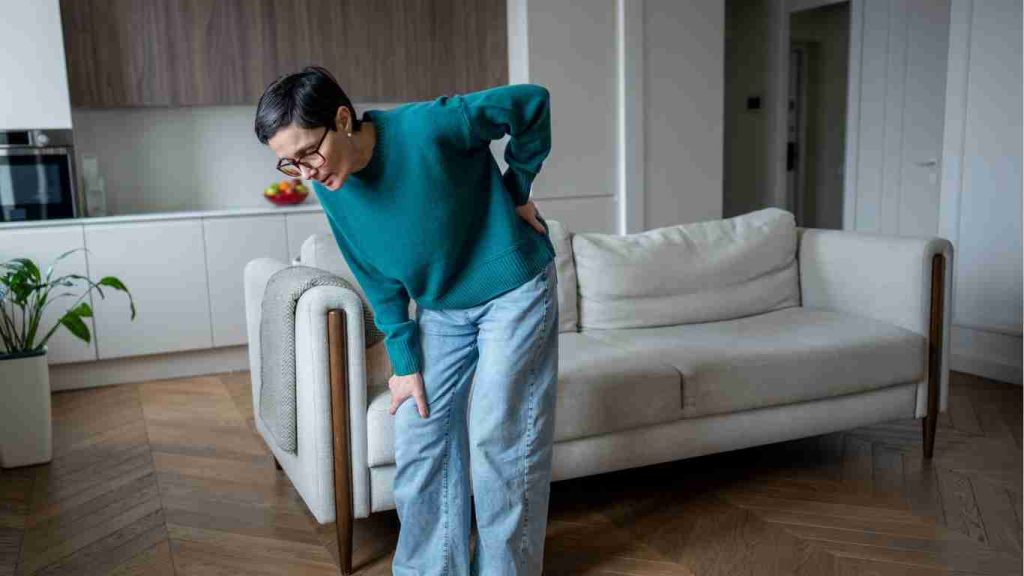
Sarcopenia is the term for age-related muscle deterioration. It happens because, over time, the number and size of muscle fibers shrink, and the body produces fewer muscle-building proteins. This leads to thinner muscles and weaker strength. Key factors accelerating sarcopenia include physical inactivity, poor nutrition (especially low protein), chronic illnesses, and hormonal changes. Both men and women experience these declines. The practical impact can be dramatic: Harvard notes that weakened muscles increase the risk of falls, fractures, and loss of independence. For example, carrying groceries, climbing stairs, or even standing from a chair all become harder. Without intervention, many older adults see a sharp drop in strength: CDC data found that only about half of Americans over 80 have normal muscle strength.
However, muscle loss is modifiable. Experts agree that strength training is the most effective way to reverse muscle loss after 60. In fact, resistance exercises not only build muscle mass and strength, but also improve bone density and metabolic health. The National Institute on Aging highlights that regular challenging activities (like carrying a weighted bag while walking) can use it or lose it: if you don’t use your muscle, you lose it, but you can maintain or even gain it with exercise.In short, addressing sarcopenia requires moving regularly and working the muscles in a safe, progressive way.
Why Strength Training is Essential After 60
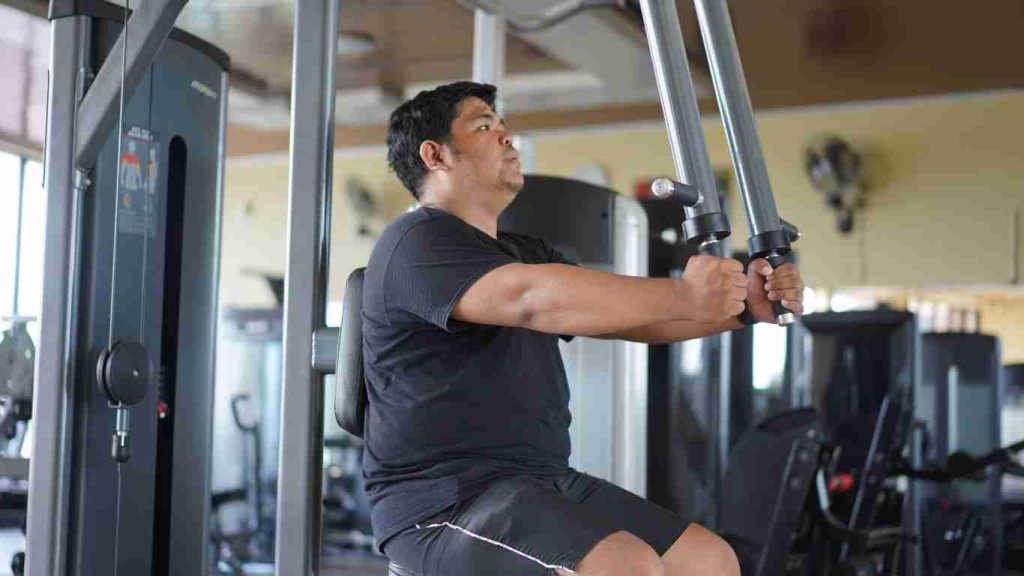
Strength training after 60 is about more than muscle – it’s about staying independent and healthy. Research and expert bodies emphasize resistance training for older adults. For example, the National Strength and Conditioning Association notes that resistance exercise is a “powerful intervention” to combat loss of muscle strength and mass in seniors. The American Heart Association similarly recommends strength training at least twice a week for all adults. These workouts improve posture, balance, and the ability to perform everyday tasks (carrying groceries, getting out of a chair, etc.). They also increase resting metabolism, helping burn more calories and maintain a healthy weight.
In practical terms, even small amounts of strength training yield benefits. The AHA advises that one set of 8–12 repetitions to fatigue for each major muscle group is effective, and doing these routines 2–3 times weekly can maintain or build muscle. The National Institute on Aging similarly recommends muscle-strengthening exercises at least twice weekly, working all major muscle groups. Progressively increasing weight or resistance (for example, going from bodyweight to bands or light weights) will continue to challenge muscles. Importantly, strength exercises also improve bone health, joint support, and reduce fall risk.
Above all, safety is crucial. Seniors should start at a comfortable level and focus on form. Warm up with light activity, use controlled movements, and allow rest days for recovery. If new to exercise or recovering from illness, consult a doctor or work with a trainer. But in nearly all cases, the message is clear: don’t be afraid of resistance training after 60. Even bodyweight moves or light dumbbells can make a big difference. As one trainer notes, you don’t need heavy gym machines your own body weight and consistency can rebuild strength.
Muscle-Building Exercises for Seniors
Alt text: Senior woman holding two purple dumbbells at chest level, demonstrating a strength exercise for seniors. The following exercises target major muscle groups and can help restore muscle after 60. Each includes step-by-step instructions. Perform 1–3 sets of 8–12 reps of each exercise, with slow, controlled motion. Rest 60–90 seconds between sets. Aim to do strength workouts 2–3 times per week, adding progressions (more reps, lighter rest, or added resistance) as you get stronger. Always use a sturdy chair or bench for support when needed, and keep good posture. Now let’s break down each exercise:
Supported Chair Squats (Sit-to-Stand)

This squat variation is ideal for seniors and strengthens the glutes, quads, and core. It mimics the sit-to-stand motion, crucial for everyday mobility. Research notes that strong legs improve balance and make tasks like climbing stairs and rising from chairs much easier.
How to do it:
1. Stand with feet hip-width apart in front of a sturdy chair. Keep your arms extended forward or at your sides.
2. Slowly shift your hips back and bend your knees to lower yourself toward the chair over 3–4 seconds. Imagine you’re sitting back gently.
3. Lightly touch or hover just above the chair seat—keep tension in your legs (don’t plop down).
4. Press through your heels and stand back up in about 1 second, squeezing your glutes. Return to the starting position.
Why it works: This movement trains the major lower-body muscles needed for independence (glutes, hamstrings, and quads). It also improves balance and joint mobility with low impact.
Progressions: Try tapping the chair more lightly and squatting slightly deeper. Once comfortable, hover above the chair without touching it. For extra challenge, hold light dumbbells or squat with feet closer together.
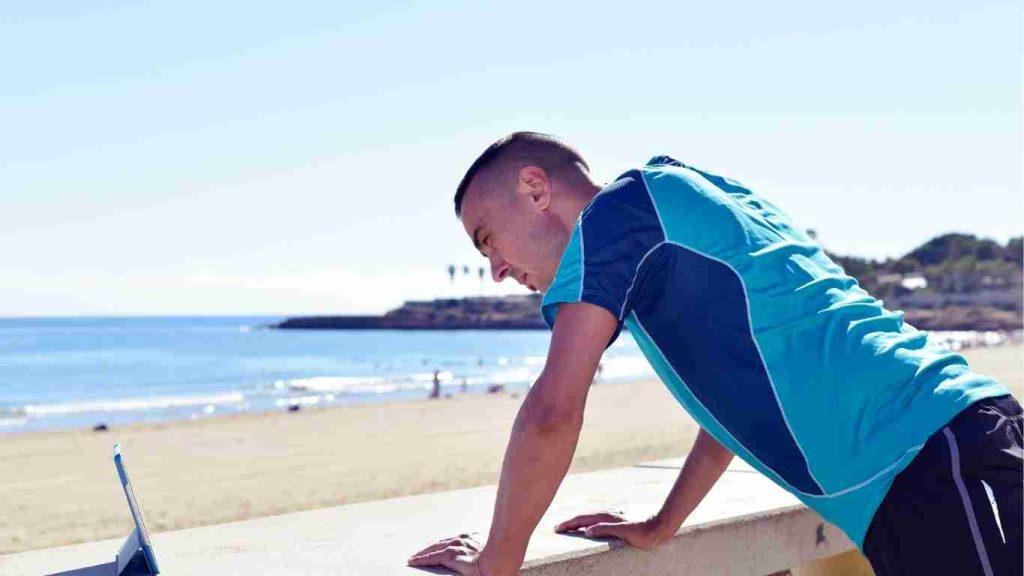
Incline Push-Ups (Wall or Counter)
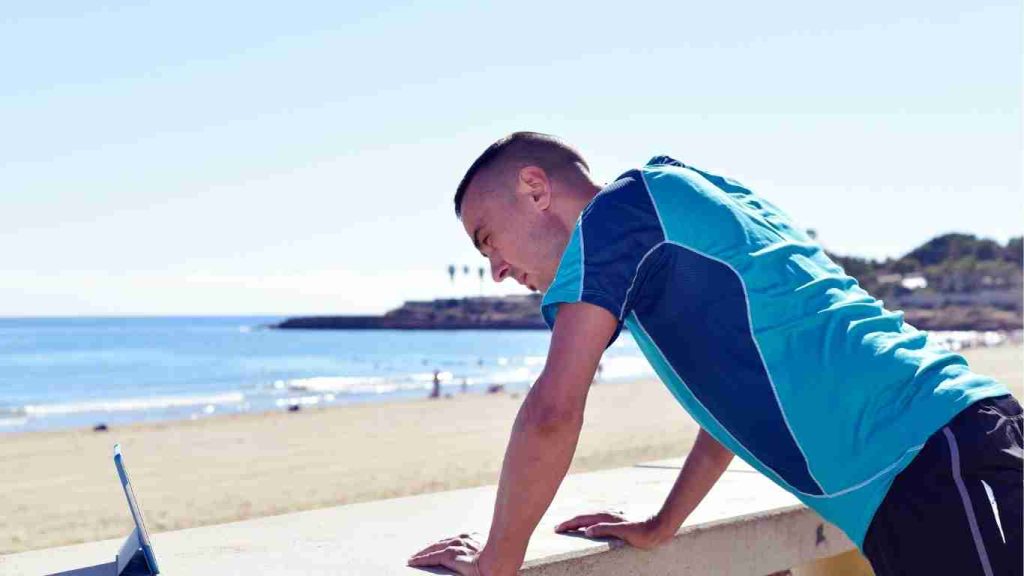
Push-ups (modified to an incline) safely build upper-body strength for seniors. They work the chest, shoulders, triceps, and core but place less stress on the joints than floor push-ups. This is a key bodyweight exercise for seniors that can be done anywhere.
How to do it:
1. Stand facing a sturdy bench, countertop, or wall. Place your hands shoulder-width apart on the elevated surface.
2. Walk your feet back until your body forms a straight line from head to heels (for wall push-ups) or from head to ankles (for a lower counter). Your body should be at an incline.
3. Keeping your body straight, bend your elbows to lower your chest toward the surface over 3–4 seconds. Inhale on the way down.
4. Pause briefly, then push firmly with your arms to return to the starting position in 1–2 seconds, exhaling as you press up.
Why it works: Incline push-ups strengthen the large upper-body muscles and improve core stability, which supports posture and daily activities. They teach good pressing form with minimal strain on wrists and shoulders.
Progressions: Use a lower surface (e.g., lower counter or sturdy table) to increase difficulty. Add a 1–2 second pause at the bottom of the movement. Ultimately you can work toward full push-ups on the floor or knee push-ups.
Superman (Prone Back Extension)
This exercise targets the muscles along the back of the body (posterior chain), crucial for good posture and a strong spine. “Superman” exercises help reverse the slumped posture common in older adults and improve balance. Strong back muscles also help prevent falls by stabilizing the torso.
How to do it:
1. Lie face-down on a mat or firm surface with legs extended and arms reaching overhead on the floor. Keep your neck in line with your spine (look down).
2. Engage your lower back and glutes to lift your chest, arms, and legs off the ground. Aim to raise them a few inches (only as high as is comfortable) and hold for 1–2 seconds at the top.
3. Slowly lower your limbs back down with control over 3–4 seconds, letting your back flatten gently to the mat.
Why it works: The Superman strengthens the lower back, glutes, and shoulders simultaneously, supporting upright posture and spine health. It counteracts forward-leaning tendencies and builds the muscles needed for lifting objects safely.
Progressions: Hold the lifted position for 3–5 seconds each rep. Try lifting slightly higher while keeping your neck neutral (avoid cranking your head back).
Chair Hip-Hinge Deadlift
This exercise mimics a deadlift motion but uses a chair or table to support form. It works the hamstrings, glutes, and lower back – the “posterior chain” muscles vital for strength and balance. Performing it from a standing position with support is excellent for seniors, since it teaches the hip-hinge movement safely.
How to do it:
1. Stand facing a sturdy chair, with a counter or table about a foot behind you. Place your feet hip-width apart.
2. Keeping your chest lifted and spine neutral, push your hips back slowly toward the table/counter. Your knees should bend slightly, and the chair seat should be right behind you.
3. Once your hips touch the table (or reach a comfortable point), grip the sides of the chair for stability if needed.
4. Drive through your heels and squeeze your glutes to stand up straight in 1 second, keeping the chair close to your body.
5. Reverse the movement: hinge your hips back and slowly lower the chair (or imagine lowering an object) back toward the seat over 3–4 seconds.
Why it works: This move strengthens the entire posterior chain (glutes, hamstrings, and lower back) without heavy weights, reinforcing safe bending patterns. It also builds the hip extension power needed for tasks like standing or picking up items.
Progressions: Hold the stand position for 2–3 seconds. Try starting slightly farther from the chair so you hinge deeper. For added resistance, slowly lower into the chair until barely touching, then stand.
Standing Calf Raises
Strong calves help with walking stability and shock absorption. Calf raises are a simple exercise for adults over 60 to build lower-leg strength and improve balance.
How to do it:
1. Stand behind a chair or near a wall for balance. Feet hip-width apart.
2. Slowly rise up onto your tiptoes (balls of the feet), lifting the heels off the ground. Hold briefly.
3. Lower your heels back to the floor in a controlled manner.
Perform 8–12 repetitions. Aim for 2–3 sets.
Why it works: This exercise directly targets the calf muscles (gastrocnemius and soleus), improving ankle stability and ankle mobility. Strong calves help you walk confidently on uneven ground and reduce fall risk. Increase speed or height gradually as you improve.
Seated Leg Extensions (Optional)
If balance is an issue, seated exercises are safe and effective. Leg extensions strengthen the quadriceps (front thigh) which help with standing and knee health.
How to do it:
1. Sit in a sturdy chair with good posture. Feet flat.
2. Extend one leg straight out in front of you, tightening the thigh muscle, and hold for 1 second.
3. Lower your foot back to the floor. Repeat 8–12 times on each leg.
Why it works: This is a gentle introduction to leg strength. It isolates the quads without loading the spine or requiring balance. Use ankle weights if too easy.
How to Get Started with Strength Training After 60
Begin slowly and listen to your body. Follow these key tips to make strength training safe and effective:
- Frequency: Aim for 2–3 nonconsecutive days per week of muscle-strengthening activity. You need rest days for recovery.
- Reps and Sets: Do 8–12 repetitions per set, and 1–3 sets per exercise. Even one set is beneficial when you’re starting.
- Intensity: Use a moderate effort – choose a weight or resistance where the last few reps are challenging but doable with good form. NIA recommends exercising to the point that doing another rep would be difficult.
- Warm-Up: Begin each session with 5–10 minutes of light activity (walking, marching in place) to warm muscles and reduce injury risk.
- Form and Control: Perform each movement slowly and deliberately. Don’t use momentum or “cheat” the range of motion. For example, lower yourself in a squat in 3–4 seconds rather than dropping. Breathe steadily – exhale on the exertion phase.
- Rest and Recovery: Take 60–90 seconds rest between sets of the same exercise. Avoid working the exact same muscle group on back-to-back days.
- Progress Gradually: Every 2–4 weeks, try to increase the challenge slightly (more reps, an extra set, slower tempo, or more weight/resistance). This progressive overload is how muscles grow stronger.
- Safety: Use a chair or wall for balance as needed. Do exercises near something you can grab if you wobble. If any exercise causes pain, stop and rest. Consult a physician before starting a new regimen, especially if you have chronic conditions or mobility issues.
Even simple equipment like resistance bands or light dumbbells (1–5 lbs) can add benefit, but you can start with just bodyweight. In fact, many bodyweight exercises for seniors (like the squats and push-ups above) are enough to build strength when done correctly. The NIA suggests beginners practice movements without weights until comfortable[6].
Simple Bodyweight Exercises for Adults Over 60
In addition to the moves above, there are other simple exercises for adults over 60 that require no equipment and can be done at home:
- Wall Push-Ups: Like the incline push-up, but with hands on the wall. A very gentle upper-body workout.
- Seated Marches: Sit and alternately lift knees toward chest, engaging core and hip flexors.
- Step-Ups: Step onto a stable step or stair (holding rail for support), then step down. Builds leg strength and balance.
- Side Leg Raises: Hold onto a chair, lift one leg to the side 8–12 times. Strengthens hips and improves stability.
- Heel-to-Toe Walks: Walk in a straight line placing heel to toe each step (like walking on a tightrope) to improve balance.
- Chair Dips (Assisted): With hands on a chair seat or counter, bend elbows to lower slightly and push up. Strengthens triceps and shoulders.
These moves can be done individually or in a circuit. For example, a quick routine could be 10 wall push-ups, 15 chair squats, 10 step-ups (each leg), 10 side leg raises (each leg), and 12 standing calf raises. Regularly doing such bodyweight routines will help reverse muscle loss after 60 by engaging multiple muscle groups.
FAQs
Q: What are the best exercises to build muscle after 60?
A: Effective exercises include squats or sit-to-stands (using a chair), push-ups (wall or incline), hip hinges or deadlift motions with chair support, calf raises, and simple core exercises like planks or bird-dogs. Strength-training moves that target all major muscle groups—legs, hips, back, chest, and arms—are best. The article above outlines step-by-step how-to’s for each of these movements.
Q: How often should seniors do strength training?
A: Experts recommend at least two days per week of resistance training for older adults. On those days, work all major muscle groups. You can do full-body workouts 2–3 times weekly, or split days (e.g., legs one day, upper body another). Allow 48 hours of rest between workouts for the same muscle group.
Q: Can adults over 60 really reverse muscle loss?
A: Yes. Numerous studies show that older adults can gain muscle mass and strength with consistent exercise. For example, NIA research and fitness experts confirm that people in their 60s and 70s can increase their muscle power with training. It may take longer and the gains may be slower than in youth, but progress definitely happens with persistence.
Q: Do I need heavy weights to restore muscle after 60?
A: Not at all. Beginners often start with bodyweight exercises or light resistance (e.g., resistance bands, 1–5 lb dumbbells). The key is resistance against muscle contraction – even a chair, a band, or your body can provide enough challenge. As you get stronger, you can gradually increase weight. Many seniors successfully rebuild muscle using just bodyweight movements and household items like water bottles or canned goods for resistance.
Q: What precautions should seniors take when exercising?
A: Always warm up first (gentle walking or marching in place). Use correct form: move slowly, avoid locking joints, and breathe steadily. Start with easier versions of exercises (e.g., wall push-ups before floor push-ups). Keep a chair or wall nearby for balance. Stay hydrated and stop if you feel dizziness or chest pain. It’s wise to check with a doctor before starting a new exercise program if you have any chronic health issues. Consider working with a trainer or physical therapist to learn proper technique.
Conclusion
Building strength after 60 is not only possible—it’s essential for health and independence. The exercises above provide a comprehensive strength training after 60 routine that uses simple movements to restore muscle and reverse age-related loss. Remember, consistency is key: aim for regular workouts, gradually increase the challenge, and always prioritize safety. As experts stress, resistance training remains the number one way to slow and even reverse age-related muscle loss. By incorporating these simple, effective exercises into your weekly routine, you’ll not only rebuild muscle but also improve balance, posture, and overall well-being.
Give these workouts a try, and feel how much stronger you can feel—no heavy gym needed. Share this guide with friends or loved ones over 60, and encourage them to join in. Which exercise will you start with today? Leave a comment below or join the conversation online to share your experience, progress, and tips for adults over 60 getting fit.