
Pacifiers (also called soothers or dummies) are widely used to calm fussy infants and even help reduce SIDS risk. However, if used too long, especially past toddler age, pacifiers can cause a set of dental changes often called “pacifier teeth.” These typically include misaligned or protruding front teeth and bite problems. In this comprehensive guide, we’ll explain what pacifier teeth are, why and how they happen, what damage they can do, and how to correct or prevent them.
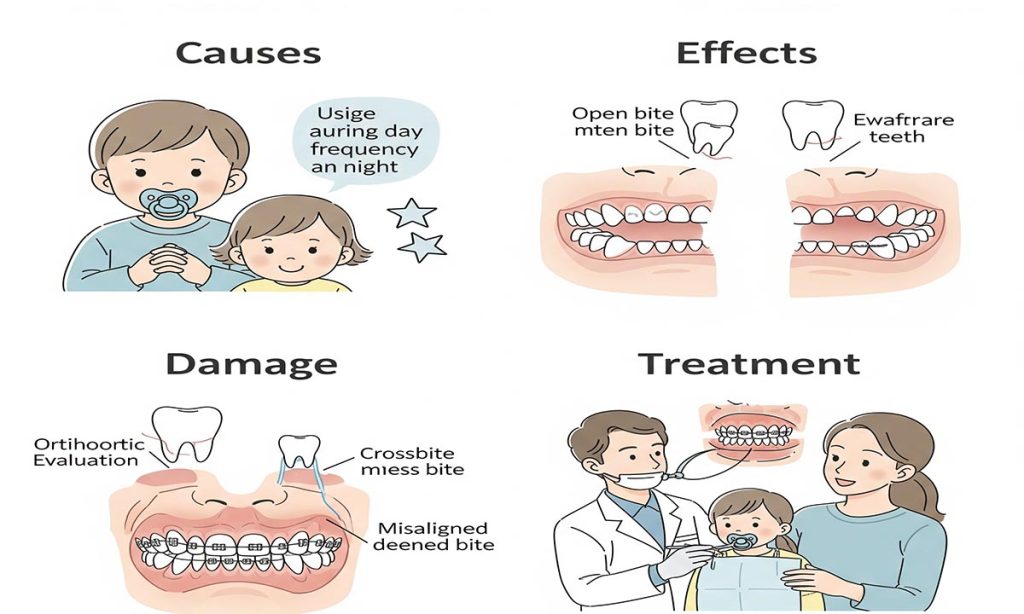
What Are “Pacifier Teeth”?
The term pacifier teeth refers to a specific type of dental malocclusion (misalignment) that results from prolonged pacifier or thumb-sucking habits. In other words, pacifier teeth are not a disease but a name for the shape changes that can develop in a child’s mouth from too much non-nutritive sucking. Dentists describe it as an orthodontic problem – for example, the front baby teeth can tilt forward or fail to meet properly, creating an open bite or overbite. In severe cases the continual pressure can even narrow the roof of the mouth and push back the jaw alignment. Importantly, “pacifier teeth” often are not painful or permanent; they simply describe misaligned baby teeth that have been influenced by sucking habits.
For example, a children’s dental guide defines pacifier teeth as the dental issues (like crooked teeth or changes in jaw shape) arising from long-term pacifier use. Studies show that all pacifier designs can potentially produce pacifier teeth if used intensely – the condition shows up as an anterior open bite, overbite, or crossbite in the affected child. That’s why pacifier teeth are sometimes called “dummy teeth” by parents. The good news is that in most cases, these malocclusions are mild and often self-correct if the habit stops early.
Causes of Pacifier Teeth
Prolonged sucking is the main cause of pacifier teeth. Studies consistently find a strong link between the duration/intensity of pacifier use and the likelihood of misaligned teeth. In practice, this means: the more hours per day a child sucks on a pacifier and the older they are when still sucking, the greater the risk. In one notable study, malocclusion was found in 71% of children who still used pacifiers (or sucked thumbs) at age 4, compared to only 14% of those who had stopped by age 2. In other words, kids who kept their pacifier past toddlerhood were about five times more likely to have bite problems than those weaned off early.
Key factors include:
- Age of Use: Keeping a pacifier beyond age 2 or 3 greatly raises risk of pacifier teeth. In fact, orthodontists warn that children who suck past age 3 commonly develop an anterior open bite or other malocclusion.
- Duration and Intensity: There’s a “dose-response” effect – long, intense sucking habits cause more damage. For example, studies note a direct correlation between daily pacifier hours and how badly the bite shifts. A child using a pacifier only at naps will be much less affected than one soothing themselves all day long.
- Pacifier Design: Classic round “button” pacifiers exert more forward/backward pressure than flattened orthodontic ones. Research suggests that orthodontic pacifiers (with a flatter, thin neck) lead to fewer open bites compared to conventional round pacifiers. Still, any pacifier can cause issues if overused, so design alone isn’t a guarantee.
In summary, the root cause of pacifier teeth is keeping babies sucking on pacifiers for too long. To illustrate:
- A child using a pacifier after age 3 is much more likely to see teeth misalignment.
- A baby who chews a pacifier for hours a day puts constant pressure on their emerging teeth and jaw, slowly pushing them out of normal alignment.
- Even “orthodontic” pacifiers can only reduce, not eliminate, this pressure.
Parents should therefore be mindful of how often and how long they let a child use a pacifier to avoid causing pacifier teeth.
Effects and Dental Damage
Pacifier teeth usually refer to alignment issues, but these habits can cause various changes in the mouth. The most common effects include:
- Open Bite: This is when the front upper and lower teeth fail to touch when the mouth is closed. Pacifier use can push the baby teeth apart, leaving a vertical gap. An open bite often looks like the baby’s top front teeth are leaning forward, unable to meet the lower teeth.
- Protruding (Buck) Front Teeth: Constant pressure on the front gums can make the upper front teeth “stick out” (increased overjet). The American Association of Orthodontists notes that prolonged sucking can cause the front teeth to protrude, making it hard for a child to close their lips comfortably.
- Crossbite: Sometimes pacifier sucking causes one or more upper teeth to sit inside the lower teeth, usually on one side. This crossbite misalignment can even shift the jaw sideways over time.
- Dental Arch Changes: Over years of sucking, the entire arch of baby teeth (and the shape of the upper palate) can be altered. The constant tongue and nipple pressure can lead to a high, narrow palate and crowded teeth. A narrow dental arch may restrict how permanent teeth erupt later on.
- Speech and Facial Development Issues: While not directly “teeth,” these orthodontic changes can affect speech (due to tongue placement) and facial structure. For instance, an AAO pediatric orthodontist explains that misaligned front teeth or an open bite may lead to speech problems, plus a higher risk of injuring those protruded teeth.
Other related problems from overuse include:
- Tooth Decay: Pacifiers themselves aren’t sugary, but parents sometimes dip them in honey, syrup, or sugar to entice baby. This practice is dangerous: leftover sugar on the pacifier leads to cavities and even gum problems over time.
- Gum Recession: In extreme cases, persistent sucking pressure at one spot can cause the gum line to recede, exposing more tooth surface and risking cavities.
- Ear Infections: (Indirectly related) The AAP recommends limiting pacifier use starting around 6–12 months because prolonged use correlates with higher ear infection risk. While this isn’t a “teeth” issue, it is a known side effect of extended pacifier use.
Despite these potential issues, it’s important to emphasize that pacifier teeth are usually temporary in toddlers and typically involve baby teeth. Most pediatric dentists agree the damage isn’t painful or dangerous, it just means intervention (or time) is needed to correct the bite. For example, a Danish pediatric dentist explains: “Pacifier teeth are not dangerous. The teeth usually correct themselves if pacifier use stops before age 3”.
Common Orthodontic Problems from Pacifiers:
- Protruding (buck) front teeth
- Open bite (gap between front teeth)
- Crossbite (upper teeth inside lowers)
- High or narrow palate / crowded arches
- Dental decay if pacifier is contaminated with sugar
All of these problems can affect chewing, speech, and smile aesthetics. Early consultation with a pediatric dentist can catch these signs and plan to fix them before they become permanent.
Recognizing Pacifier Teeth (Signs Before and After)
How can you tell if a child has developed pacifier teeth? In young children, look for visible signs of bite change. A classic indicator is an anterior open bite – when the baby tries to close the mouth, the upper and lower front teeth do not touch, leaving a noticeable gap. You might also see the upper front baby teeth tipped forward or the child’s bite shifted to one side (crossbite). Dentists often compare photos or X-rays “before” and “after” pacifier use to track this: early photos of the baby’s teeth may look normal, while later images show the front teeth misaligned. For example, one orthodontic practice notes that crooked or widely spaced front teeth are hallmarks of pacifier teeth.
Keep in mind: pacifier teeth usually develop gradually. A toddler who used a pacifier occasionally may have very mild misalignment, whereas a child who sucked round the clock will show a more pronounced change. Not every tooth out of line is serious, but it’s the pattern that signals pacifier effects. If you notice your toddler’s bite looks different (front teeth not meeting, or a gap in the smile), it’s worth bringing up at the next dental check-up. The dentist may point out the characteristic “pacifier bite” and advise next steps.
In essence, the “before” of pacifier teeth is a normal set of baby teeth with tight contacts, and the “after” is an open or distorted bite after months of sucking. The quicker the habit ends, the earlier the “after” can improve.
Treatment: How to Fix Pacifier Teeth
The primary goal in fixing pacifier teeth is stopping the cause and then realigning the teeth if needed. Here are the key steps and treatments:
- Wean off the Pacifier: The first and most important step is to stop pacifier use. If the habit ends by around age 2–3 years, most mild cases will self-correct as the child’s permanent teeth grow in. Pediatric experts usually advise beginning weaning by 12–18 months and finishing by 3 years. Gradually restrict pacifier use (e.g. naps or bedtime only), then discontinue altogether. Many families use positive reinforcement, distraction, or involve the child in the decision to say goodbye to the paci. As soon as the pacifier is gone, nature can do its work: the pressure ceases and the bite often improves.
- Pediatric Dental Assessment: Schedule a visit with a pediatric dentist or pediatric dentist-orthodontist as soon as you notice alignment issues. Early evaluation is crucial. A pediatric dentist can monitor the child’s jaw and teeth, and decide if you can simply watch the bite and give it time, or if early intervention is warranted. Because children’s mouths grow fast, catching and addressing malocclusion before age 6 can often avoid more complex treatment later.
- Orthodontic Appliances: If the bite is significantly altered, an orthodontist may recommend treatment once the child is old enough (sometimes even while baby teeth are still present). Options include:
- Braces or Aligners: Traditional braces or clear aligner therapy can realign the front teeth into the correct position. This is similar to treating any misaligned bite, with small brackets or removable trays gradually shifting the teeth back.
- Palatal Expander: If the upper jaw is too narrow (common with a high palate from sucking), a palatal expander can widen the upper arch and allow teeth to align properly. This device attaches to the back teeth and is slowly adjusted to expand the palate.
- Retainers or Habit Appliances: Sometimes simple removable devices (like a Hawley retainer with a crib) are used to discourage future sucking (often used for thumb-sucking) and to guide teeth as they shift.
- Surgery (rare): In extreme, untreated cases (usually well into childhood), jaw surgery might be considered to correct major skeletal misalignments. This is quite uncommon for pacifier teeth alone, and typically only if the jaw growth is severely impacted and the child is older. It would be done in conjunction with orthodontic work.
In short, early weaning combined with professional follow-up is the best fix. For many children, simply stopping the pacifier habit will allow their bite to normalize by itself as adult teeth erupt. If problems persist, orthodontic treatment (braces, expanders, etc.) can straighten everything out.
Preventing Pacifier Teeth: Safe Use and Teething Tips
While pacifiers can be very helpful, prevention and good practices can minimize the risk of pacifier teeth:
- Limit Pacifier Use: Avoid constant day-long sucking. Use the pacifier mainly for sleep or when the baby needs extra comfort. Don’t hand it to the baby all day. The less time spent sucking, the lower the risk.
- Follow Age Guidelines: Leading pediatric groups recommend weaning off pacifiers by around 2–3 years of age. For example, the AAP suggests reducing use by 6–12 months and quitting by age 2 to prevent dental issues. The American Academy of Pediatric Dentistry explicitly advises ending non-nutritive sucking by age 3. By age 4, no child should regularly use a pacifier.
- Choose Orthodontic Pacifiers: If you do use a pacifier, pick a design that is considered tooth-friendly. Orthodontic pacifiers have flatter, thinner nipples and a larger shield. They are marketed to spread the sucking pressure more evenly. While evidence is mixed, some studies show they cause less severe open bite than classic round pacifiers. In any case, look for BPA-free, age-appropriate pacifiers made of soft silicone. For best pacifier for teeth, many experts suggest a symmetrical, flexible silicone pacifier.
- Hygiene and Feeding: Never dip the pacifier in sugary liquid (like honey or juice) – this can quickly lead to cavities. Also, don’t share pacifiers between kids to avoid germ spread. Sterilize or wash pacifiers regularly, and replace them if cracked or worn.
- Weaning Strategies: Plan ahead for weaning. Pediatric dentists often suggest gradually reducing the pacifier, especially after the first year. For example, start by restricting it to bedtime, then shorten the time, and finally discard it entirely. Positive reinforcement (stickers, praise) can help a 2-year-old give up the paci. Consistency is key: the moment is easier if it’s done before permanent teeth arrive.
- Teething Pacifiers and Toys: During teething phases, babies need relief. A pacifier can help soothe sore gums. The sucking motion massages the gums and provides comfort. Many soother brands even offer teething pacifiers (silicone with textured bumps or a shape designed for chewing) to combine pacifier and teether benefits. However, remember that pacifiers are not primarily teethers. For gum pain, you can also offer chilled teethers or teething rings. A pediatric guide advises that pacifiers and teethers serve different purposes: pacifiers satisfy sucking, while teethers are for chewing and gum massage. Both have their place: for example, some parents use a pacifier after breastfeeding or at bedtime, but give a rubber teether when their baby is cranky from teething.
- Alternate Comfort Measures: Encourage other soothing techniques as your child gets older. Gentle rocking, cuddling, or a favorite stuffed toy can reduce reliance on sucking. When it’s time to transition away from the pacifier, having these alternatives will make it easier for the child (and their teeth!).
By using pacifiers sensibly – choosing the right type, limiting duration, maintaining hygiene, and stopping by toddlerhood – parents can enjoy the benefits of pacifiers without paying the price of pacifier teeth. Remember, any misalignment risk is directly tied to how long and how intensely the pacifier is used.
Frequently Asked Questions
Do pacifiers ruin a baby’s teeth? Not in a permanent way if used properly. In general, moderate pacifier use will not “ruin” teeth. The main issue is that prolonged use can cause mild misalignment while only baby teeth are present. Many pediatric dentists say that any bite changes are usually reversible if the pacifier habit ends by age 2–3. Problems arise mainly if a child keeps sucking past toddlerhood. So pacifiers don’t inherently destroy teeth, but they can shift them if overused. With early weaning and proper dental care, most kids will have normal teeth later.
Can a pacifier mess up my child’s teeth? Yes, if the pacifier is used too long. Any pacifier has the potential to alter tooth alignment when used excessively. “Mess up” usually means an open bite or protruding front teeth. But again, the key word is excess. A pacifier used only at bedtime until age 2 is very unlikely to cause noticeable damage. On the other hand, a child constantly sucking a pacifier at age 3 or 4 is quite likely to develop a gap between front teeth or similar issues.
Do pacifiers affect teeth? Yes, pacifiers can affect teeth and jaw development, especially with prolonged use. Orthodontists warn that continual sucking applies pressure on the oral structures, which can show up as dental misalignment as early as 18 months old. These effects include open bite, overjet, and arch changes. However, effects are mostly on baby teeth – if the pacifier habit stops in time, the permanent teeth usually come in normally.
Do pacifiers help with teething? Yes, pacifiers can help soothe a teething baby. The act of sucking a clean pacifier applies gentle pressure on inflamed gums and distracts the baby, which often eases discomfort. Many parents use a chilled or textured pacifier (a “teething pacifier”) for this reason. Just be sure to keep the pacifier clean and to remove it once teething pain subsides to avoid overuse.
Which pacifier is best for my baby’s teeth? Look for an orthodontic-style pacifier that is sized for your baby’s age. These pacifiers have a flat bottom and soft silicone nipple, which spreads the pressure more evenly across the jaw. The material should be BPA-free, and the shield should be larger than the baby’s mouth to prevent swallowing. While no pacifier is completely without effect, orthodontic pacifiers are generally considered the best pacifier for teeth because of their design. Avoid pacifiers with sweet coatings or unusual attachments.
Will pacifier teeth correct themselves? Often, yes – if the pacifier is stopped in time. In many cases, toddler “pacifier teeth” will improve naturally as the child grows and the adult teeth come in. Dentists emphasize that early cessation is crucial. If pacifier use ends by age 3, the dental arch has a good chance to normalize on its own. The younger the child when the habit stops, the more likely self-correction. However, if a child still has a significant misaligned bite after the pacifier is gone (especially beyond age 4), professional orthodontic treatment may be needed to fully correct it.
How are pacifier teeth fixed? The main fix is to wean off the pacifier immediately and consult a pediatric dentist. A dentist will monitor the bite and may suggest orthodontic treatment if the misalignment is severe. Common treatments include braces or clear aligners for the front teeth, and expanders to widen the palate if needed. In mild cases, no treatment beyond stopping the pacifier is needed, as the teeth will shift back naturally. In short: stop the habit, visit the dentist, and follow their advice – often the damage can be corrected with orthodontics or sometimes with minimal intervention.
Conclusion
Pacifier teeth are a real but manageable issue. By understanding the causes and effects, parents can prevent most problems: limit pacifier use, choose orthodontic designs, and wean by age 2–3. If bite changes do occur, the majority will resolve once the pacifier is gone; any persistent issues can be treated by a dentist or orthodontist. Ultimately, pacifiers are a useful tool when used wisely. With proper precautions, you can soothe your baby today without compromising their dental health tomorrow. For more guidance, consult your pediatrician or pediatric dentist – and feel free to share your experiences or tips below to help other parents navigate pacifier teeth safely!.





4 thoughts on “Pacifier Teeth: Causes, Effects, Damage, and Treatment”