
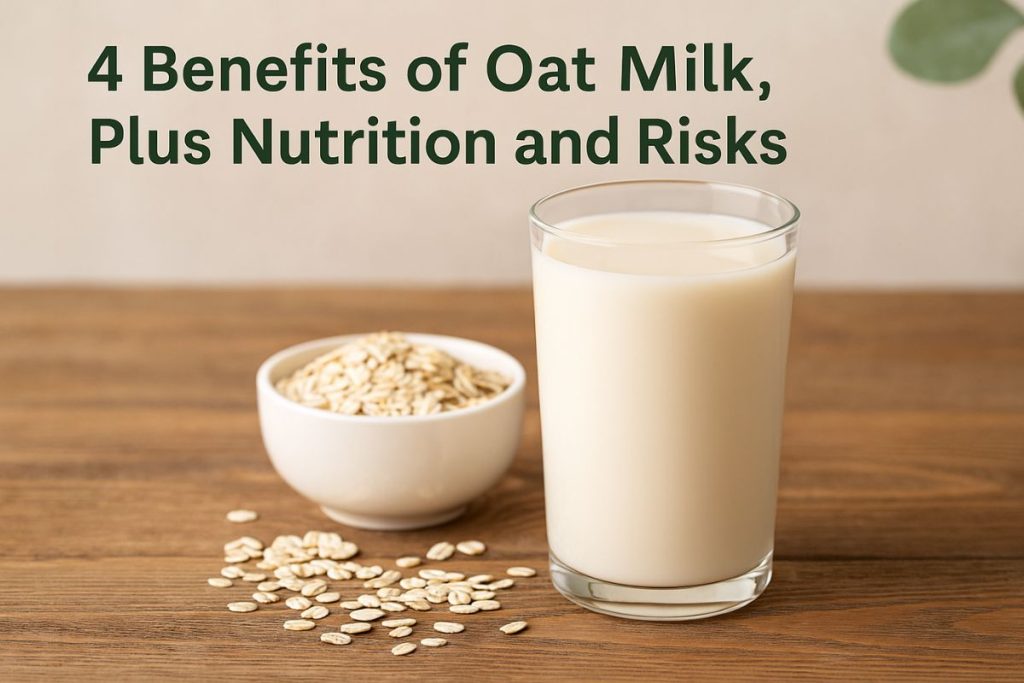
Unsweetened oat milk is a dairy-free, plant-based milk made by blending oats with water. It’s naturally lactose-free and vegan-friendly, and most varieties are fortified with calcium and vitamins D/B12. Unsweetened oat milk contains zero added sugar, making it lower in calories and less likely to spike blood glucose than sweetened versions. In this guide we’ll explore 4 major benefits of unsweetened oat milk, its nutrition profile (including calories, fiber and vitamins), and any potential risks to consider.
What Is Unsweetened Oat Milk?
Unsweetened oat milk is simply oat milk with no added sugars or flavors. It’s made by soaking and blending whole oats in water, then straining out the solids. This yields a creamy, slightly sweet liquid that mimics the texture of cow’s milk. By choosing the unsweetened version, you avoid added sweeteners; most of the carbohydrates come naturally from the oats themselves.
Many unsweetened oat milks are also fortified with nutrients like calcium and vitamin D to match dairy milk’s nutritional content. Popular unsweetened brands include Oatly, Planet Oat, Chobani Zero Sugar Oatmilk, and Califia Farms Unsweetened Oat Milk. Each offers a slightly different taste and nutrition profile, but all share the benefits of low sugar and high fiber.
4 Key Benefits of Unsweetened Oat Milk
Unsweetened oat milk is rising in popularity for its health and environmental perks. Here are four main benefits:
1. Allergy-Friendly & Dairy-Free
Oat milk contains no lactose, nuts, or dairy, making it suitable for people with lactose intolerance, milk allergies, or nut allergies. Unlike cow’s milk, oat milk won’t cause lactose-related gas or bloating. It’s also free of soy and peanuts, which is ideal for those with common plant allergies.
A certified gluten-free oat milk (made from oats grown and processed without contamination) can even be safe for gluten-sensitive individuals. In short, unsweetened oat milk is a gentle alternative for anyone who needs or prefers to avoid animal milk products.
2. Heart-Healthy Fiber Content
Oat milk is a good source of soluble fiber, especially beta-glucan, the same fiber found in whole oats. Beta-glucan can form a gel in the gut that binds cholesterol and carries it out of the body. Studies show that daily oat consumption can lower LDL (“bad”) cholesterol by a few percent. In practice, drinking unsweetened oat milk regularly may help support heart health. For example, a 2020 study found that drinking 3 cups of oat milk per day reduced total and LDL cholesterol modestly. Overall, the natural fiber in oat milk aids digestion and may improve blood sugar control, which benefits cardiovascular health over time.
3. Fortified with Vitamins & Minerals
Most store-bought oat milks (including unsweetened versions) are fortified with nutrients often missing from a vegan diet. For instance, Oatly adds vitamins A, B12, riboflavin, and minerals like calcium, potassium and phosphorus. One serving of many fortified oat milks provides ~20–25% of the Daily Value for calcium and vitamins D and B12. For example, Califia Farms Unsweetened Oat Milk delivers about 245 mg calcium (25% DV) per cup. These added nutrients help make oat milk a suitable replacement for dairy, supporting bone health and energy metabolism. Just be sure to check labels: unsweetened oat milk can be found both plain (no nutrients added) and fortified. Choosing a fortified unsweetened oat milk ensures you get the extra vitamins and minerals.
4. Environmentally Sustainable
Oat milk has a smaller environmental footprint than dairy milk. Studies report that producing oat milk generates fewer greenhouse gases and uses less water and land than cow’s milk. For instance, one analysis found that oat milk’s carbon footprint is only about 29% of the equivalent cow’s milk, and it uses far less water (roughly 16% of that needed for dairy). From a global perspective, choosing oat milk over dairy can significantly reduce resource use. Many consumers prefer oat milk not just for health, but also because oat farming tends to be more eco-friendly than almond or dairy production. Thus, unsweetened oat milk scores high on sustainability as well.
Nutrition Facts of Unsweetened Oat Milk
Unsweetened oat milk is relatively low in calories but has more carbohydrates than nut milks. A typical 1-cup (240 mL) serving contains roughly:
- Calories: ~45–120 kcal (varies by brand and added fat)
- Total Fat: 0.5–7 g (often with added oil for creaminess)
- Carbohydrates: 8–16 g (mostly from oats)
- Dietary Fiber: 1–2 g (including heart-healthy beta-glucans)
- Sugars: 0 g (unsweetened oat milk has no added sugar)
- Protein: 1–5 g (brands differ; typically ~2 g)
- Calcium: ~250–350 mg (often ~20–30% DV when fortified)
- Vitamin D: Variously fortified (often ~20% DV)
- Vitamin B12 & B2: Typically ~20% DV if fortified
For example, Planet Oat Unsweetened Original Oatmilk has about 45 calories, 0g sugar, 1g protein and 350 mg calcium per cup. In contrast, Oatly’s Unsweetened Oatmilk has roughly 100 calories, 2 g sugar and 2 g protein per cup (from oats). Califia’s version (8 oz) lists about 100 calories, 2 g sugar, 2 g protein and 100 mg sodium. The wide range in calories is often due to added oils or fortification.
Tip: Check the nutrition label on your unsweetened oat milk. Look for around 2–3 g of fiber (fiber-rich brands) and minimal sugar. Calcium (typically 20–25% DV) and vitamin D (10–25% DV) are usually included as fortification if listed.
Glycemic Index of Unsweetened Oat Milk
The glycemic index (GI) of unsweetened oat milk is moderate. Most sources estimate oat milk’s GI around 60–70. In other words, it can raise blood sugar moderately compared to low-GI foods (<55). (Note: sweetened oat milk would be higher.) For people without blood sugar issues, this moderate GI is usually fine in a balanced diet. However, if you have diabetes or are on a keto diet, be mindful that oat milk’s carbs may still be significant. Vegans with diabetes are often advised to watch portion sizes of oat milk (or pair it with protein/fat) to avoid spikes.
Popular Unsweetened Oat Milk Varieties
There are many brands and flavors of unsweetened oat milk available:
- Planet Oat Unsweetened Original Oat Milk: Widely sold at grocery stores. Per cup: ~45 calories, 1g protein, 0g sugar. Also comes in a Vanilla Unsweetened variety (adds vanilla flavor with 0g sugar, ~40 cal).
- Oatly Oat Drink Unsweetened: A leading oat milk brand. Its original unsweetened drink has about 40 calories per cup and no added sugar. They also offer a Barista Edition (extra creamy for coffee).
- Chobani Zero Sugar Oatmilk: A new entrant. Contains 0g added sugar and about 60 calories per cup (as listed by retailers). It’s made from gluten-free oats and is vegan.
- Elmhurst Unsweetened Oat Milk (“Milked Oats”): Made only from oats and water (no gums or emulsifiers). It’s thicker and more caloric; about 130 calories and 5g protein per cup. This product is also certified gluten-free and Non-GMO.
- Califia Farms Unsweetened Oat Milk: Contains sunflower oil for creaminess. A serving (8 oz) has ~100 calories, 2g sugar, 2g protein, and is fortified with ~20% DV calcium.
- Best Unsweetened Oat Milk (Overall): Subjective – many nutrition experts favor Oatly or Califia for fortification levels and taste. For cost-effectiveness, Planet Oat is usually cheapest. Look for organic options if that’s a priority (Oatly and others offer organic-certified versions).
- Unsweetened Oat Milk Creamers: These are thicker, barista-style oat milks sold as coffee creamers (e.g., Pacific Foods Oat Creamer, Oatly Barista creamer). They have a similar nutrition profile but are labeled as “creamer.”
- Unsweetened Vanilla Oat Milk: If you like flavor without sugar, many brands offer vanilla-flavored unsweetened oat milks (with natural vanilla). These have ~0g sugar but a few extra calories from flavorings (often ~40–50 cal). They add a sweet taste without added sugar.
How to Use Unsweetened Oat Milk
Unsweetened oat milk’s creamy texture makes it versatile. You can:
- Add to Coffee or Tea: Use it as a dairy-free creamer in lattes or your morning mug. Many coffee shops use unsweetened oat milk (barista blends) for its frothiness.
- Blend into Smoothies & Shakes: It’s excellent in fruit smoothies or protein shakes, adding creaminess and extra calcium.
- Pour Over Cereal or Oatmeal: Use oat milk just like dairy milk on cold cereal, granola or warm oatmeal. Its natural sweetness complements breakfast.
- Baking & Cooking: Substitute 1:1 for cow’s milk in recipes – pancakes, muffins, sauces or soups. Oat milk is slightly sweet, so you might reduce added sugar in recipes.
- Hot Chocolate & Pudding: Make dairy-free hot cocoa or chia pudding by mixing cocoa/sweetener with unsweetened oat milk.
- Dairy-Free Yogurt: Though not as common, you can ferment oat milk into plant yogurt or use it in recipes requiring yogurt (mixed with thickeners).
Use unsweetened oat milk in any recipe that calls for milk. Its neutral taste and richness generally works best in recipes that benefit from creamy texture. Always shake or stir the carton well, as separation can occur. For coffee, a barista edition unsweetened oat milk (with extra fat) will froth better.
Potential Risks & Considerations
Unsweetened oat milk is healthy for most people, but be aware of these downsides:
- Higher Carbs than Other Milks: Oat milk has more carbohydrates (8–16g per cup) than almond or soy milk. It’s not suitable for very low-carb diets. If you have diabetes or insulin resistance, monitor portions or stick to 1/2 cup at a time. As a guideline, sweetened oat milks can have up to 12g added sugar per cup – which is why unsweetened is recommended whenever possible.
- Lower Protein: Oat milk only has ~2g protein per cup (even with fortification) compared to 8g in cow’s milk. It’s not a complete food on its own. If you rely on oat milk, ensure you get enough protein from other sources (meat, beans, tofu, etc.).
- Potential Additives: Some commercial oat milks contain oils, gums or emulsifiers (to improve texture and shelf life). A few people may be sensitive to these additives, causing digestive upset. If you notice bloating or gas, try a clean-label oat milk (few ingredients) or make your own at home. Elmhurst, for example, prides itself on only oats, water and salt.
- Phytic Acid: Oats contain phytic acid, which can bind minerals like iron and zinc. Regular consumption of large amounts of oat products could slightly reduce absorption of those minerals. This is not usually a concern if you have a balanced diet, but if you’re at risk of deficiency, rotate plant milks or foods.
- Child Nutrition: Oat milk should not replace breast milk or infant formula for babies, nor should it be the sole milk for toddlers, since it’s low in fat and protein for growing children. Always consult a pediatrician about giving oat milk to children.
- Glycemic Impact: As noted, the GI is moderate (≈69). For most people this is fine. However, if you have diabetes or prediabetes, use unsweetened oat milk sparingly and balance it with protein/fat in the same meal.
By choosing unsweetened oat milk, you avoid the biggest pitfall (added sugars) and get most benefits with few risks.
FAQs (Frequently Asked Questions)
Q: Is unsweetened oat milk good for you?
A: Yes, generally. Unsweetened oat milk provides fiber, calcium, and plant-based nutrients with no added sugar, making it a healthy dairy alternative. It’s especially good for those avoiding dairy. It offers potential benefits like improved cholesterol (from beta-glucan) and added vitamins if fortified. However, it is higher in carbs and lower in protein than dairy, so it should be part of a balanced diet. People with diabetes or very strict low-carb needs should consume it in moderation due to its moderate glycemic index.
Q: How many calories are in unsweetened oat milk?
A: It varies by brand, but most unsweetened oat milks range from about 40 to 130 calories per 8-oz cup. For example, Oatly Unsweetened Oatmilk has only ~40 calories per cup, while some creamier versions (with added oils) can be ~100–130 calories. Check the label: calories mostly come from added plant oils or oats themselves. In any case, unsweetened oat milks are low-calorie compared to dairy milk (≈150 cal) or sweetened nut milks (≈80–100 cal).
Q: Does unsweetened oat milk contain sugar?
A: No. By definition, unsweetened oat milk has 0g added sugar. Any sugar on the label comes from the natural breakdown of oat starches. The nutrition facts of unsweetened varieties should read “Total Sugars: 0g, Added Sugars: 0g”. Flavored versions (vanilla, chocolate) might have naturally occurring sugars, but still no added sugar. Always check the ingredient list to confirm there are no sweeteners.
Q: What is the glycemic index of unsweetened oat milk?
A: Unsweetened oat milk has a moderate GI (around 60–70). This is because oats have maltose and starch. A GI of ~69 means it will raise blood sugar more than low-GI foods but less than high-GI foods like glucose (100). Most healthy adults can handle this GI without issue. For precise context, oat milk’s GI is similar to sweet potatoes or muesli. Those with blood sugar concerns may want to limit portion size or choose a lower-GI milk (e.g., unsweetened almond milk, which is GI ~30).
Q: How many nutrients does unsweetened oat milk have?
A: Unsweetened oat milk is fairly low in protein (~2g) and fat (~1g) per cup. It does provide fiber (~1–2g) and iron (~6% DV) naturally. The real nutrition boost comes from fortification. Fortified unsweetened oat milks often give 20–25% DV of calcium, B12, D, and B2 per serving. In short, it has modest natural nutrition, but many brands fortify it to match the nutritional profile of dairy milk. Always compare labels, as nutrients vary by brand.
Q: Is unsweetened oat milk lactose-free and dairy-free?
A: Absolutely. Oat milk is naturally lactose-free and contains no dairy or animal ingredients. It’s made purely from oats and water (plus any added oils or vitamins). This makes it safe for vegans and those with lactose intolerance. It’s also free of cholesterol and contains only plant fats.
Q: Which unsweetened oat milk is best?
A: “Best” depends on your needs. For the most nutrients, look for brands fortified with vitamins D, B12 and calcium (e.g., Oatly, Califia). For lowest calories, Oatly Unsweetened (40 cal) and Planet Oat Unsweetened (45 cal) are top choices. For best taste or creaminess, many people like Oatly Barista or Elmhurst Milked Oats (which is richer and higher-calorie). If you prefer organic ingredients, try products labeled USDA Organic (e.g., some Oatly or Pacific Foods variants). Read reviews and labels: the best oat milk for you will fit your diet (low sugar, high fiber, etc.) and taste preferences.
Conclusion
Unsweetened oat milk is a versatile, dairy-free milk alternative that offers several health perks. It’s creamy and naturally sweet-tasting without added sugars, making it a good low-sugar option for coffee, cereal, smoothies and baking. Key benefits include its lactose-free and allergen-friendly nature, heart-healthy fiber (beta-glucans), and nutrient fortification (calcium, vitamins). It’s also more sustainable than cow’s milk in terms of water and carbon footprint. On the flip side, oat milk is higher in carbs than most plant milks, so diabetics or keto followers should consume it moderately. Overall, choosing unsweetened oat milk (over sweetened) maximizes its advantages while minimizing risks like extra sugar intake.
Unsweetened oat milk can easily replace dairy in nearly any recipe, so give it a try in your next latte, smoothie, or pancakes! Have a favorite brand or way you use oat milk? Let us know in the comments. If you found this guide helpful, feel free to share it with friends looking for healthy, plant-based alternatives.
Read Last Post : Magnesium Lotion , Good Shoes For Bunions





3 thoughts on “4 Benefits of Unsweetened oat milk”